


California
Workers' Compensation Insurance for Utility Locating and Hydrovac Contractors

or call us: (858) 384‑1506
California's
utility locating and hydrovac industry puts workers in some of the most hazardous conditions you'll find on any jobsite. Between excavation cave-ins, high-pressure water systems, confined space atmospheres, and relentless summer heat, the injury potential for field technicians, drivers, and operators is significant. A single claim from a trench collapse or a struck-by incident on a highway shoulder can cost six figures before litigation even begins. That's why workers' compensation coverage isn't just a regulatory checkbox for contractors in this space: it's the financial backbone of your operation. Getting the right policy structure, understanding how California class codes affect your premiums, and building a safety culture that actually reduces your experience modification rate are decisions that separate thriving contractors from those drowning in claims costs. This guide breaks down the specific risks, coverage structures, and claims management strategies that matter most for utility locating and hydrovac businesses operating in California. Whether you're running a two-truck crew or managing dozens of field technicians across multiple metro areas, the stakes are the same. One poorly structured policy or one missed safety protocol can put your entire business at risk. We built this resource to give you the practical, field-tested knowledge you need to protect your crews and your bottom line.
Understanding California Workers' Comp for Specialized Utility Services
California requires every employer with at least one employee to carry workers' compensation insurance. There are no exceptions for small crews, and the penalties for non-compliance are severe: misdemeanor criminal charges, fines up to $100,000, and potential stop-work orders from Cal/OSHA. For utility locating and hydrovac contractors, the regulatory pressure is even higher because your work intersects with public infrastructure, confined spaces, and active roadways.
The challenge isn't just getting a policy. It's getting the right policy, one that accurately reflects the specific hazards your employees face every day. A generic construction policy won't account for the unique exposures of hydrovac operations or the dual-role nature of many field technicians who locate utilities in the morning and operate vacuum excavation equipment in the afternoon.
State Mandates for Utility Locating and Hydrovac Contractors
California's Division of Workers' Compensation (DWC) governs how policies are rated, how claims are processed, and how disputes are resolved. Your policy must be issued through either the State Compensation Insurance Fund (SCIF) or a licensed private carrier. Self-insurance is an option, but only for employers who can demonstrate significant financial reserves and meet the DWC's strict approval criteria.
One thing many contractors overlook: California's workers' comp system is "no-fault," meaning your employees don't need to prove you were negligent to receive benefits. If a field tech gets hurt on the job, they're entitled to medical treatment, temporary disability payments, and potentially permanent disability benefits regardless of who caused the injury. That's a broad exposure, and it's why your premium rates are closely tied to your specific operations.
How Class Codes Affect Your Premium Rates
Every employee on your payroll gets assigned a Workers' Compensation Insurance Classification (WCIRB class code), and these codes directly determine your base premium rate. For hydrovac and utility locating contractors, several codes commonly apply. Class Code 6218 (Excavation) covers most trenching and vacuum excavation work, and the 2026 dual-wage threshold for this code sits at $45.00 per hour, meaning employees earning above that threshold get a lower rate applied to their wages above it.
Class Code 7720 (Police Officers or Patrolmen) sometimes gets misapplied to traffic control personnel, when they should more accurately fall under codes related to flagging and
road work. Misclassification is one of the most common and costly mistakes we see at Fusco Orsini & Associates. If your audit reveals employees coded incorrectly, you could face
retroactive premium adjustments that run into tens of thousands of dollars.

High-Risk Operations and Coverage Requirements
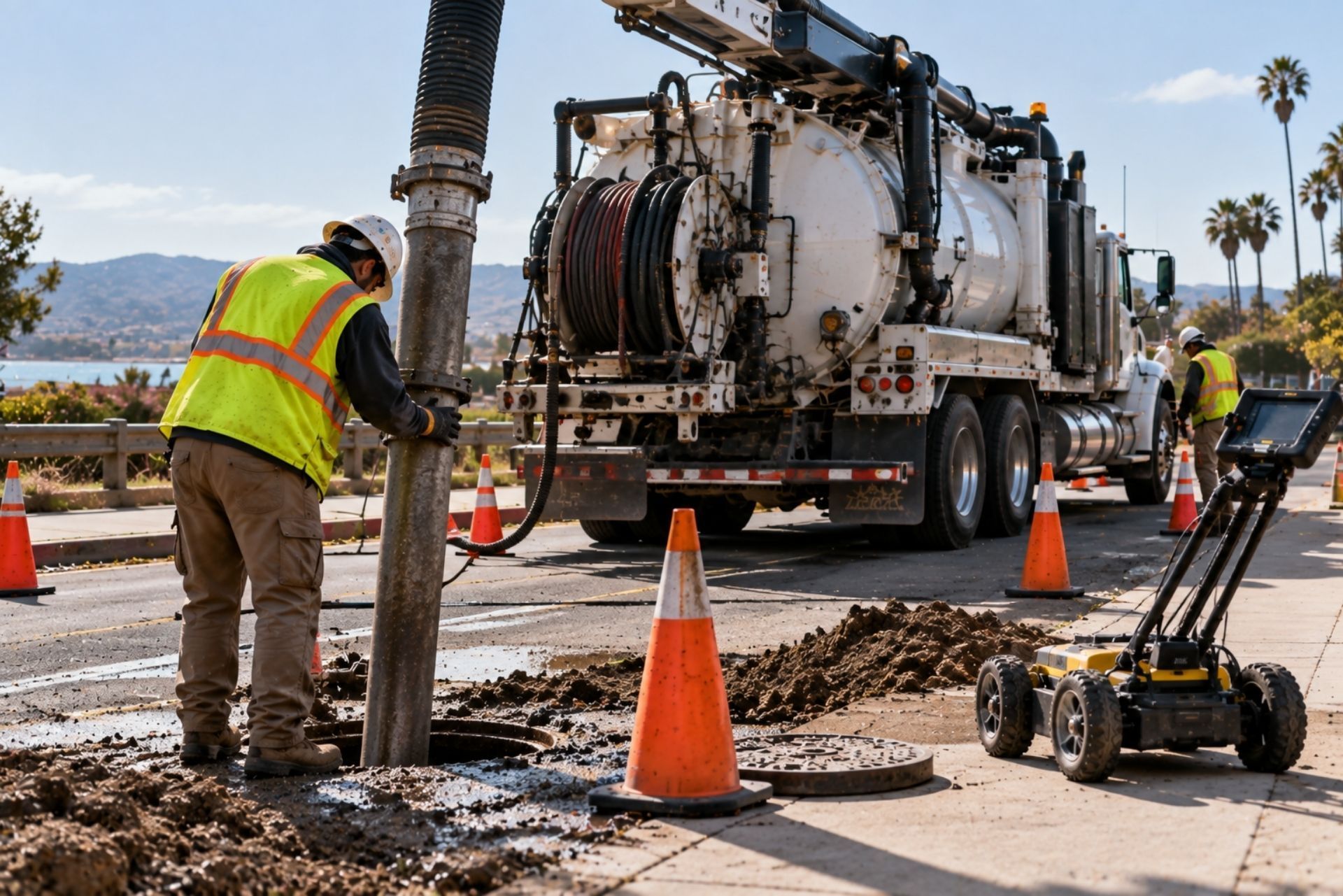
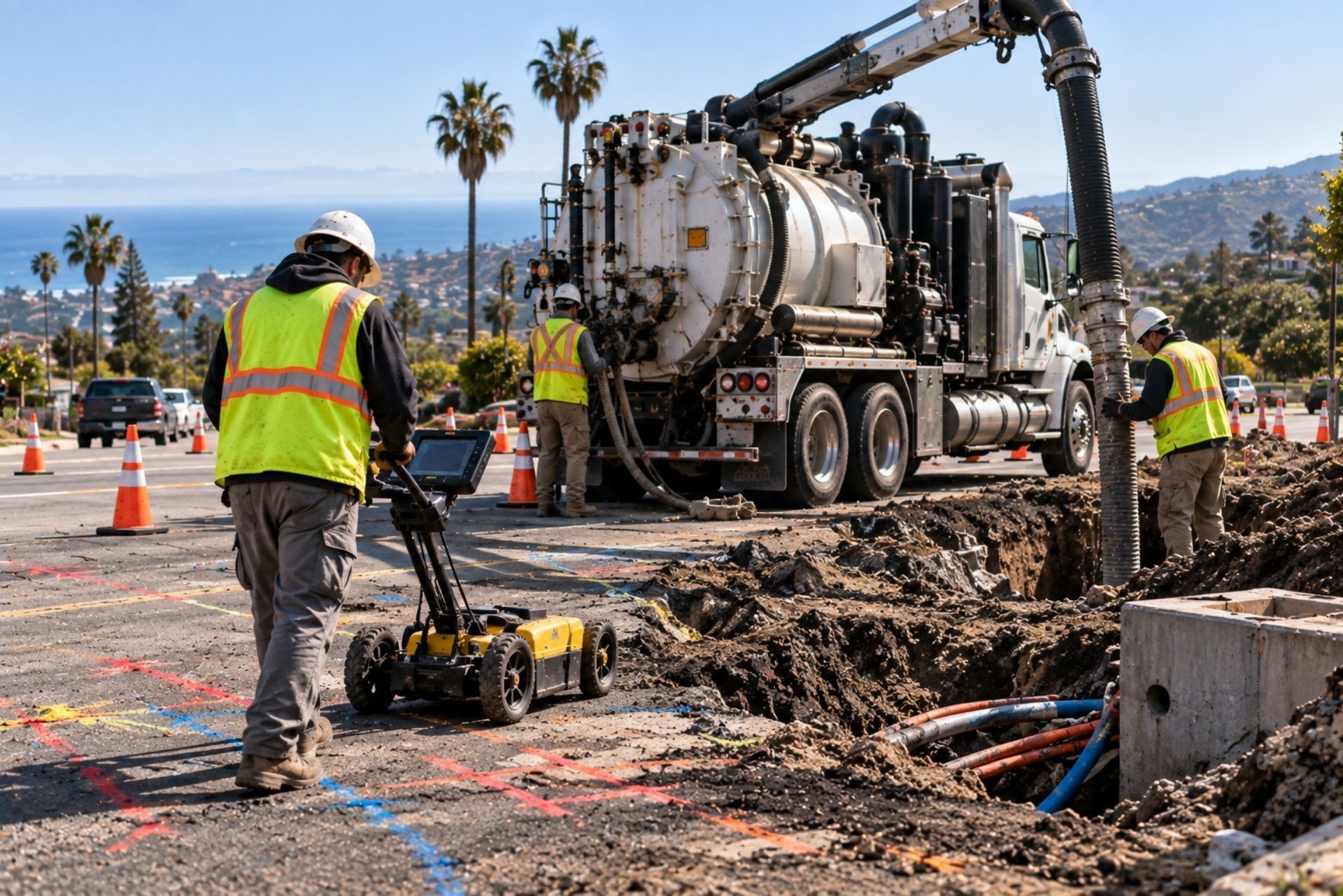
Utility locating and hydrovac work concentrates several of construction's most dangerous activities into a single jobsite. Your crews routinely face excavation hazards, atmospheric dangers, high-pressure equipment, vehicle strikes, and extreme heat, often simultaneously. Each of these exposures carries its own claims profile, and your policy needs to account for all of them.
Confined Space Entry and Trenching Hazards
Trenching fatalities remain stubbornly high across the construction industry. Excavation-related incidents account for a disproportionate share of construction deaths, and California's soil conditions, particularly in areas with loose fill or high water tables, make cave-ins a persistent threat. Cal/OSHA's trenching standards (Title 8, Section 1541) require protective systems for any trench deeper than five feet, but compliance alone doesn't eliminate the risk.
Confined space entry adds another layer. Utility vaults, manholes, and underground chambers can harbor toxic atmospheres, oxygen deficiency, or engulfment hazards. A single confined space rescue gone wrong can generate workers' comp claims exceeding $500,000 when you factor in medical treatment, lost wages, and potential permanent disability.
Traffic Control and Roadside Safety for Field Crews
Your field technicians and flaggers spend hours positioned alongside active traffic lanes. Work zone fatalities and injuries have been rising nationally, and a 2026 highway work zone safety survey found that vehicle intrusions into active work zones remain the leading cause of fatal incidents for roadside crews. California's state DOTs have backed the 2026 National Work Zone Safety Campaign, but the burden of protecting your workers falls squarely on you as the employer.
Struck-by claims from traffic incidents tend to be catastrophic: severe orthopedic injuries, traumatic brain injuries, or fatalities. These are high-dollar claims that will spike your experience modification rate for years. Proper traffic control plans, high-visibility PPE, and crash-rated barriers aren't optional: they're the difference between a manageable premium and one that threatens your ability to bid competitively.
Hydrovac Operators vs. Commercial Drivers: Defining Roles
Here's where classification gets tricky. A hydrovac operator who also drives the truck between jobsites may fall under two different class codes depending on how your payroll is structured. The driving portion of their duties might be classified under a commercial vehicle operator code, while the excavation work falls under 6218. California's WCIRB rules allow split classifications in some cases, but only if you maintain accurate time records showing how hours are divided between duties.
If you can't document the split, the entire payroll for that employee gets assigned to the higher-rated classification. This is an area where working with a specialist broker like Fusco Orsini & Associates pays for itself quickly, because proper classification can save you 15-25% on premiums for dual-role employees.
Comparing Policy Structures for Utility Contractors
Not all workers' comp policies are created equal, and the differences matter most for high-hazard operations. A standard policy from a generalist carrier may leave gaps that only become visible when you file a claim.
Table: Standard vs. Specialized Utility Coverage
| Coverage Feature | Standard Policy | Specialized Utility Policy |
|---|---|---|
| Class Code Accuracy | Often uses broad codes | Assigns precise codes per role |
| Confined Space Coverage | Included but not tailored | Accounts for atmospheric/rescue risks |
| Dual-Role Classification | Defaults to highest rate | Allows documented split classification |
| Heat Illness Protocol | Generic guidelines | California-specific Cal/OSHA compliance |
| Traffic Zone Exposure | Standard roadside rates | Rates reflect actual work zone hours |
| Claims Handling | General adjusters | Adjusters experienced with utility claims |
| Safety Program Credits | Limited or none | Premium discounts for documented programs |
The right policy structure doesn't just protect you from claims: it actively reduces your cost of coverage over time. Carriers that specialize in construction and utility work understand the nuances of your operations and price accordingly.
Managing Claims in High-Exposure Environments
Claims management for utility contractors isn't about avoiding claims entirely: that's unrealistic given the hazard profile. It's about controlling severity, returning injured workers to duty quickly, and building a track record that keeps your experience modification (X-Mod) rate below 1.0.
The most expensive claims in this industry tend to involve delayed reporting. When a field tech tweaks their back operating a hydrovac wand and doesn't report it for two weeks, that minor strain can become a chronic injury with months of lost time. Every day of delay increases the average claim cost significantly.
Implementing Safety Programs to Lower Your X-Mod
Your X-Mod is calculated based on three years of claims history compared to the industry average for your class codes. A modifier above 1.0 means you're paying more than average; below 1.0 means you're paying less. For a utility contractor with $500,000 in annual premium, a 0.15 reduction in your X-Mod translates to $75,000 in annual savings.
Effective programs for utility and hydrovac operations should include:
- Daily tailgate safety meetings covering site-specific hazards
- Documented confined space entry procedures with atmospheric monitoring logs
- Heat illness prevention plans that meet Cal/OSHA's outdoor heat standard requirements, including shade access, water provision, and acclimatization schedules
- Return-to-work programs with modified duty assignments for injured employees
- Quarterly safety audits with written corrective action plans
These aren't just best practices. Carriers actively reward documented safety programs with premium credits, and Fusco Orsini & Associates can help you identify which programs deliver the greatest return for your specific operations.
Common Questions About Utility Contractor Insurance
Do I need separate policies for utility locating and hydrovac operations? Not necessarily. A single workers' comp policy can cover both operations as long as each employee is assigned the correct class code. The key is accurate payroll allocation between activities.
What happens if a subcontractor's employee gets hurt on my jobsite? If your sub doesn't carry their own workers' comp, California law makes you the "statutory employer," meaning their injured worker can file a claim against your policy. Always verify certificates of insurance before any sub starts work.
Can I exclude owners or officers from my policy? California allows corporate officers and LLC managing members to exclude themselves from coverage by filing a waiver. Sole proprietors and partners are excluded by default but can elect to be covered. Think carefully before opting out: a serious injury without coverage can bankrupt you personally.
How does California's heat illness standard affect my claims? Cal/OSHA's heat illness prevention regulation (Title 8, Section 3395) requires specific protections when temperatures exceed 80°F. Heat-related claims are fully compensable under workers' comp, and failure to follow the standard can trigger additional Cal/OSHA penalties on top of the claim costs.
What's the penalty for not carrying workers' comp in California? It's a criminal misdemeanor punishable by up to one year in county jail and fines of at least $10,000. The state can also issue stop-work orders and assess penalties of up to $100,000 against uninsured employers.
How often should I audit my class code assignments? At minimum, review them annually before your policy renewal. Any time you add new services, equipment, or job roles, reassess immediately. Incorrect codes discovered during a carrier audit can result in large retroactive premium charges.
Making the Right Choice for Long-Term Protection
Workers' compensation for California utility locating and hydrovac contractors isn't a commodity purchase. The hazards your crews face daily, from trench collapses and confined space atmospheres to high-speed traffic and triple-digit heat, demand a policy built around your actual operations, not a generic template.
Start by auditing your current class code assignments and payroll allocations. Verify that every subcontractor on your jobs carries valid coverage. Build safety programs that do more than check a box: make them specific to the confined spaces, trenches, and roadways where your people work. These steps directly reduce your X-Mod and your long-term insurance costs.
If your current broker doesn't understand the difference between a Class Code 6218 dual-wage threshold and a commercial driver classification, it's time for a conversation with a team that does. Reach out to Fusco Orsini & Associates for a coverage review built around the realities of utility contracting in California. Your crews deserve protection that matches the risks they take every day.
About The Author:
Michael Fusco
As CEO and Principal of Fusco Orsini & Associates, I’m dedicated to helping businesses and individuals achieve peace of mind through smarter insurance solutions. With extensive experience in commercial insurance and risk management, I focus on building long-term relationships and providing clarity, trust, and value in every policy we deliver.
// Coverage for Your Company
Protect Your Business, Employees, and Assets
We help business owners protect their companies from risks that can disrupt operations or threaten growth. Our team explains your options clearly and guides you to the right coverage for your business.
// Who We Help
Focused Insurance for Your Industry
We understand the unique risks and needs of different industries. Our team provides clear guidance and customized coverage to help you operate with confidence.


// Coverage for Individuals and Families
Protect What Matters Most at Home and Beyond
Renters Insurance
Affordable protection for your personal property in a rented space.
Life Insurance
Ensure your loved ones are financially secure when they need it most.
Umbrella Insurance
Extra liability coverage to protect you beyond standard policies.

// Frequently Asked Questions
Clear Answers to Common Questions

5.0 Reviews on Google
What You Need to Know Before Getting Started
People often ask us about the most common questions around business consulting, insurance, and employee benefits.
What types of insurance does my business need?
We evaluate your operations, identify risks, and explain the policies that make sense for your business. Our goal is to help you understand what you’re buying and ensure nothing important is overlooked.
The right coverage depends on your industry, size, and exposures. We’ll walk you through each option and help you make a confident decision.
Do you provide employee benefits?
Yes. Our dedicated benefits team offers group health, dental, vision, life, and disability plans. We also help employees with claims and explain how to use their benefits effectively.
We design plans that meet your company’s goals while keeping costs manageable and ensuring employees feel supported.
Do you only serve clients in California?
No. While we are based in San Diego, California, we work with clients in 31 states across the country.
We have the licenses and experience to support businesses of all sizes wherever they operate.
Can you review my existing policies?
Absolutely. We offer policy reviews at no cost to you. We’ll look for gaps in coverage, overlapping policies, and opportunities to save money.
Our team makes transitioning from your current provider simple and seamless.
How quickly can I get a quote?
In most cases, we respond the same business day with clear options and next steps.
We know that time matters, and we work efficiently to provide you with answers and coverage without unnecessary delays.
// What Our Clients Say
Reviews from Business Owners Like You
Over 500 Five-Star Ratings Across Platforms
// Business Tips & Resources
Helpful Articles for Business Owners
Our blog offers clear advice to help you protect your business, support your employees, and plan for the future with confidence.


Contact Us
Phone
Location