



A single utility strike on a California HDD job can spiral from a few thousand dollars in direct repair costs into six figures of liability before the dust settles. Industry data from 2026 shows that while direct repair costs for a utility strike average $3,500 to $4,000, the
total economic impact can be 29 times higher once you factor in cleanup, service interruption, and third-party claims. That ratio alone should tell you everything about why insurance for California directional drilling and boring contractors isn't optional: it's survival. The right combination of utility strike liability, XCU coverage, pollution protection, drill rig and equipment policies, commercial auto, and workers' compensation separates a contractor who recovers from a bad day and one who doesn't. This guide breaks down each coverage layer so you know exactly what you're buying and why it matters.
Core Insurance Requirements for California Horizontal Directional Drilling (HDD)
California holds HDD contractors to some of the strictest insurance and licensing standards in the country. Your C-34 or C-42 license, your crew's safety, and your ability to bid on municipal or utility projects all hinge on carrying the right policies at the right limits. Getting any piece wrong doesn't just expose you to lawsuits: it can cost you your license entirely.
General Liability and Underground Utility Protection
Standard commercial general liability (CGL) policies protect you against third-party bodily injury and property damage, but most standard forms exclude underground work through XCU exclusions. XCU stands for explosion, collapse, and underground hazards, and if your policy still carries that exclusion, you're essentially uninsured for the exact risks you face every day on the jobsite.
You need a CGL policy with the XCU exclusion removed. This is non-negotiable for directional drilling. General contractors and municipalities will require certificates of insurance showing XCU coverage before you set foot on their project. While $1 million per occurrence is the standard liability limit, California infrastructure prime contractors often mandate limits of $5 million or higher for high-risk underground work (https://www.justdial.com/india/hdd-rock-reamer).
Contractors who fail to notify DigAlert (811) at least two working days before excavating face civil penalties up to $50,000 for willful violations. Your insurer will also scrutinize your 811 compliance history during underwriting. SoCalGas reported a
record-low infrastructure damage rate in 2026 despite a 6% increase in 811 calls, a trend underwriters may use to offer "clean record" credits to compliant contractors.
California C-34 and C-42 Licensing Insurance Mandates
The California Contractors State License Board (CSLB) requires all licensed contractors to maintain specific insurance minimums. Under SB 216, effective January 1, 2026, all licensed contractors must carry workers' compensation insurance even if they have no employees. That's a major shift from prior rules that exempted sole proprietors.
SB 291 gives the CSLB
increased authority to suspend or revoke licenses for contractors who misreport payroll or fail to comply with insurance requirements. If you're running a directional drilling operation and your coverage lapses, you're not just risking a fine. You're risking your ability to work in California.
Workers' Compensation for High-Risk Drilling Crews
Drilling crews face serious hazards: rotating machinery, high-pressure fluid systems, confined spaces, and heavy equipment in active roadways. Workers' comp classification codes for drilling operations carry some of the highest rates in the construction industry.
Effective September 1, 2026, the California Insurance Commissioner adopted a 6.6% increase in the average advisory pure premium rate, setting the benchmark at $1.65 per $100 of payroll. For drilling crews classified under high-hazard codes, your actual rate will be well above that benchmark. An experienced broker like Fusco Orsini & Associates can help you shop carriers that specialize in construction and drilling classifications, which often makes a meaningful difference in annual premiums.

Protecting Your Specialized Drilling Assets
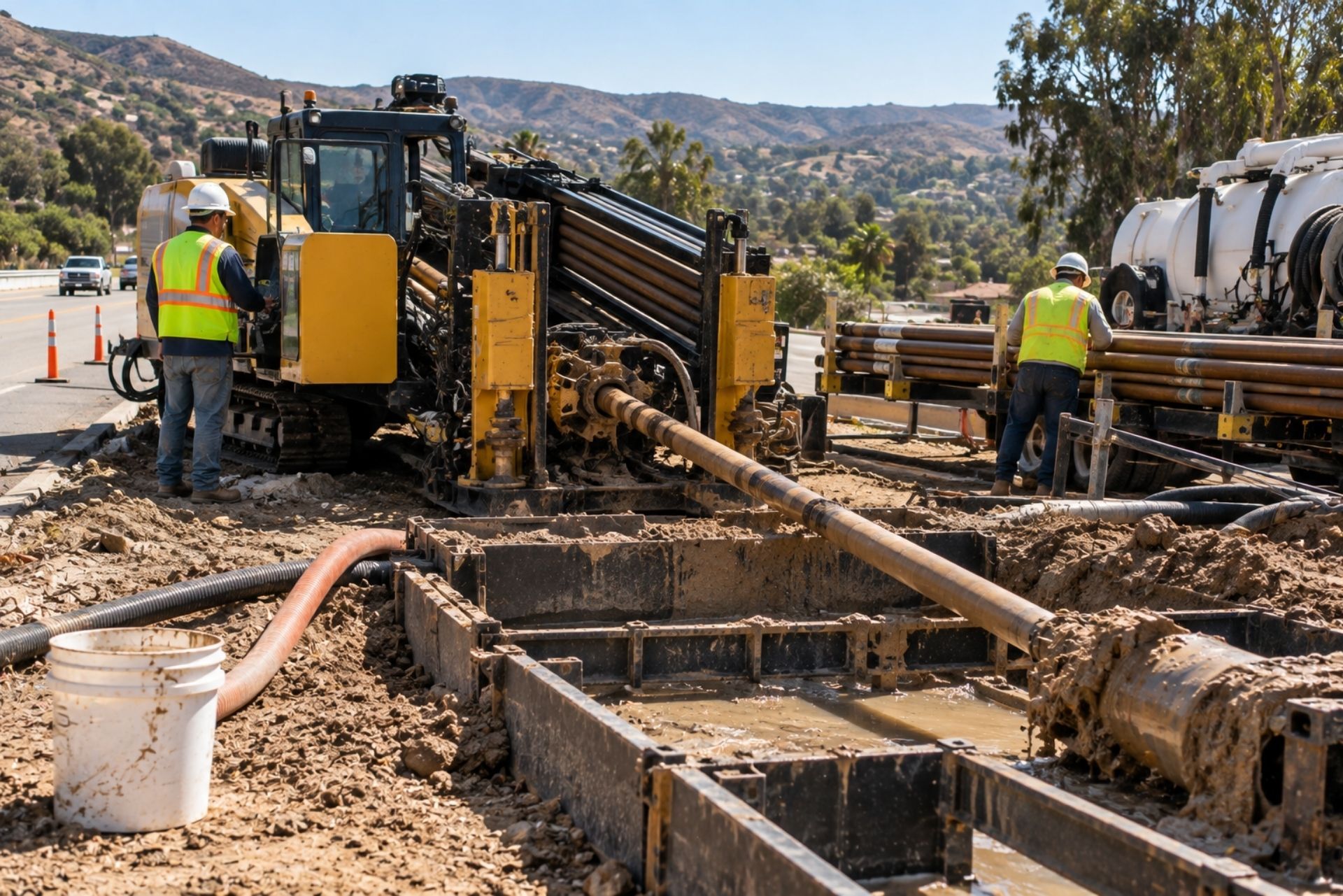
Your rigs, tooling, and transport vehicles represent hundreds of thousands of dollars in capital. A standard business property policy won't cover equipment that moves between jobsites. You need purpose-built coverage for assets that spend most of their life in transit or underground.
Inland Marine Coverage for Rigs and Boring Equipment
Inland marine insurance is the industry standard for protecting mobile equipment. It covers your HDD rigs, locators, mud mixing systems, drill pipe, reamers, and tooling whether they're on a jobsite, in transit, or stored at your yard. Policies can be written on a scheduled basis (listing each piece of equipment and its value) or on a blanket basis for smaller tools.
One common gap we see: contractors insure the rig but forget about downhole tooling. A "lost string" event in HDD operations, including 500 feet of pipe, a transmitter housing, and a reamer, can result in a total loss exceeding $37,000 (https://www.justdial.com/india/hdd-rock-reamer). Make sure your inland marine policy covers tools and attachments, not just the primary machine.
Commercial Auto for Heavy Transport and Support Trucks
Moving an HDD rig requires heavy-duty trucks, trailers, and often pilot vehicles. California commercial auto insurance rates for fleets are seeing increases of 8% to 12% in 2026, driven largely by "nuclear verdicts" exceeding $10 million in jury awards. Your commercial auto policy needs to cover owned vehicles, hired vehicles, and non-owned autos if employees ever use personal trucks for work purposes.
Pay attention to trailer interchange agreements if you're borrowing or renting lowboys. A gap in trailer coverage can leave you holding the bag for a trailer that gets damaged during transport.
Managing Environmental and Professional Risks
HDD work creates environmental exposure that most general contractors never face. Drilling fluid returns, inadvertent bore path deviations, and contaminated soil encounters all create liability that standard CGL policies explicitly exclude.
Pollution Liability and Inadvertent Return (Frac-out) Coverage
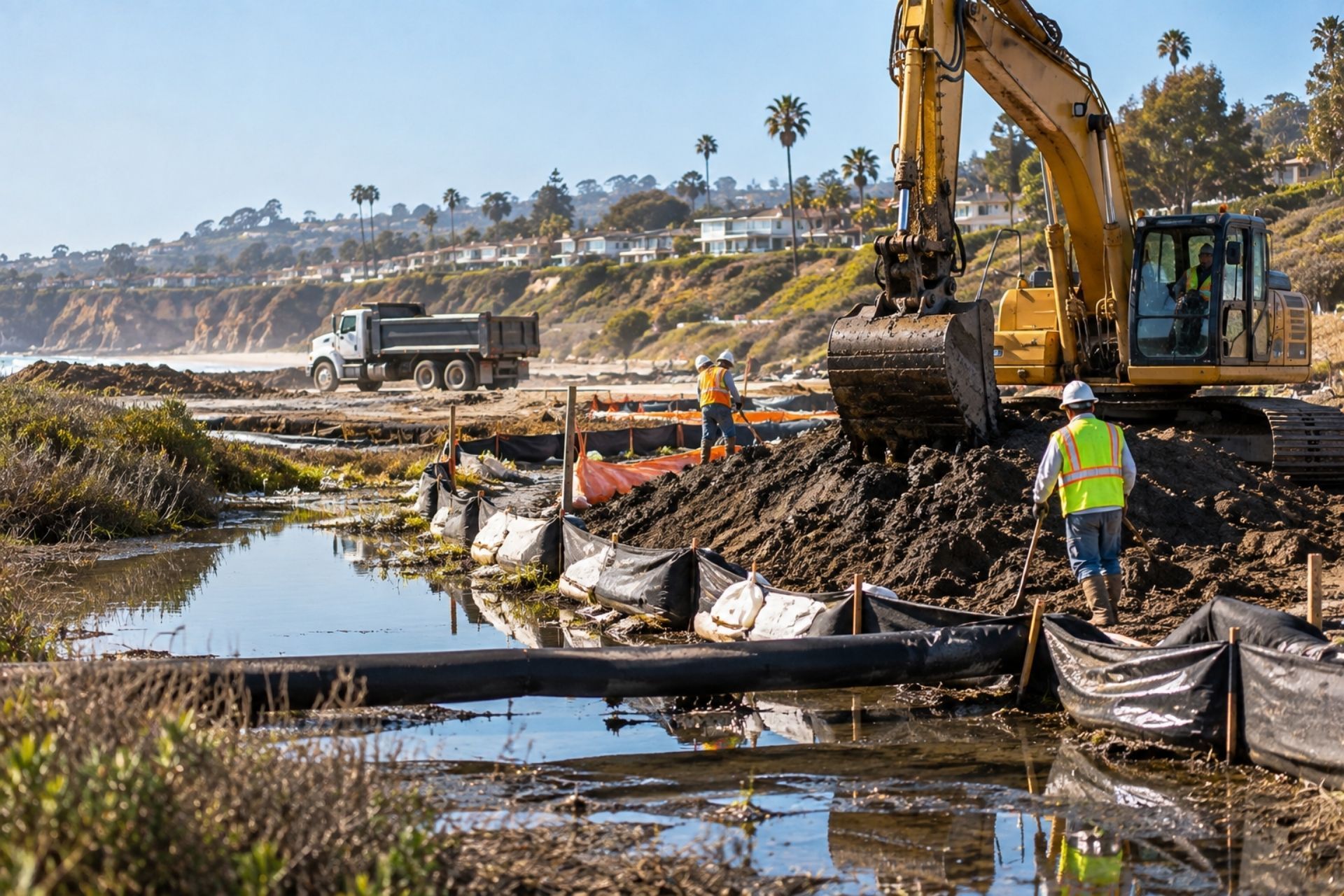
A frac-out, where drilling fluid escapes the bore path and surfaces in an unintended location, is one of the most common and expensive incidents in HDD work. Bentonite slurry surfacing in a creek, wetland, or someone's backyard triggers environmental cleanup obligations and potential regulatory fines. Standard general liability policies exclude pollution events almost universally.
You need a contractor's pollution liability (CPL) policy that specifically covers inadvertent returns. Look for policies that cover both first-party cleanup costs and third-party claims. Fusco Orsini & Associates regularly works with drilling contractors to secure CPL policies that address frac-out scenarios, contaminated soil encounters, and transportation-related spills of drilling fluids.
Professional Liability for Design and Engineering Errors
If your company provides bore path design, engineering calculations, or utility locating services alongside your drilling work, you carry professional liability exposure. A miscalculated bore path that damages a fiber optic trunk line or a gas main creates claims that fall outside your CGL coverage.
Professional liability (errors and omissions) insurance covers the financial consequences of design mistakes, incorrect utility locates, and flawed engineering recommendations. Even if you subcontract the engineering, your client's contract may require you to carry this coverage.
Comparing Standard vs. Specialized Drilling Policies
Not all policies are created equal, and the differences between a standard CGL and a specialized drilling program can leave massive gaps in your protection.
Table: General Liability vs. Pollution Liability Coverage Limits
| Coverage Feature | Standard CGL | Contractor's Pollution Liability (CPL) |
|---|---|---|
| Third-party bodily injury | Covered | Covered (pollution-related) |
| Third-party property damage | Covered (surface only) | Covered (including subsurface) |
| Utility strike damage | Covered if XCU removed | Covered if pollution results |
| Frac-out / inadvertent return | Excluded | Covered |
| Contaminated soil disposal | Excluded | Covered |
| Regulatory defense costs | Excluded | Typically covered |
| Transportation of drilling fluids | Excluded | Covered (with endorsement) |
| Typical per-occurrence limit | $1M - $2M | $1M - $5M |
The takeaway here: CGL with XCU removal and a standalone CPL policy work together. One doesn't replace the other. You need both if you're doing any subsurface work in California.
Common Questions About California Drilling Insurance
FAQ: Do I need special insurance for underground utility hits? Yes. A standard CGL policy with the XCU exclusion still in place won't cover underground utility damage. You need XCU coverage explicitly removed from your policy, and if the strike causes a pollution event, you'll also need a CPL policy to cover cleanup and environmental claims.
FAQ: How much does a typical HDD insurance policy cost in California? Costs vary widely based on your revenue, crew size, equipment values, and claims history. Workers' comp alone starts at a benchmark of $1.65 per $100 of payroll as of September 2026, but drilling classifications run higher. A comprehensive program including GL, pollution, inland marine, auto, and workers' comp for a mid-size HDD contractor typically runs well into five figures annually.
FAQ: Does standard General Liability cover frac-outs? No. Frac-outs are classified as pollution events, and virtually every standard CGL policy excludes pollution. You need a separate contractor's pollution liability policy that specifically addresses inadvertent drilling fluid returns.
FAQ: Why is Inland Marine insurance necessary for my boring rig? Your rig moves between jobsites constantly. Standard commercial property policies cover assets at a fixed location. Inland marine is designed for mobile equipment and covers your rig, tooling, and accessories whether they're on site, in your yard, or on a trailer heading to the next job.
FAQ: Will my insurance cover damage to the drill bit or reamer? It depends on your inland marine policy's terms. Some policies cover downhole tooling; others exclude items that wear out or break during normal use. You'll want to confirm that your policy covers accidental damage to drill bits, reamers, and swivels, not just the rig itself. Ask your broker to review the exclusions carefully.
Making the Right Choice for Your Cre
California's regulatory environment for directional drilling contractors is tightening, not loosening. Between SB 216's universal workers' comp mandate, SB 291's enforcement teeth, and rising commercial auto premiums, the cost of being underinsured far exceeds the cost of proper coverage. A single uninsured utility strike or frac-out can generate claims that dwarf your annual premium many times over.
Build your insurance program in layers: start with CGL (XCU removed), add workers' compensation, then layer in pollution liability, inland marine for your rigs and tooling, and commercial auto for your fleet. Each piece addresses a distinct risk that the others don't cover.
If you're unsure whether your current policies actually protect you for the work you do, reach out to Fusco Orsini & Associates for a coverage review. We specialize in construction and drilling contractor insurance and can identify gaps before they become claims. Don't wait for a loss to find out what your policy doesn't cover.
About The Author:
Michael Fusco
As CEO and Principal of Fusco Orsini & Associates, I’m dedicated to helping businesses and individuals achieve peace of mind through smarter insurance solutions. With extensive experience in commercial insurance and risk management, I focus on building long-term relationships and providing clarity, trust, and value in every policy we deliver.
// Coverage for Your Company
Protect Your Business, Employees, and Assets
We help business owners protect their companies from risks that can disrupt operations or threaten growth. Our team explains your options clearly and guides you to the right coverage for your business.
// Who We Help
Focused Insurance for Your Industry
We understand the unique risks and needs of different industries. Our team provides clear guidance and customized coverage to help you operate with confidence.


// Coverage for Individuals and Families
Protect What Matters Most at Home and Beyond
Renters Insurance
Affordable protection for your personal property in a rented space.
Life Insurance
Ensure your loved ones are financially secure when they need it most.
Umbrella Insurance
Extra liability coverage to protect you beyond standard policies.

// Frequently Asked Questions
Clear Answers to Common Questions

5.0 Reviews on Google
What You Need to Know Before Getting Started
People often ask us about the most common questions around business consulting, insurance, and employee benefits.
What types of insurance does my business need?
We evaluate your operations, identify risks, and explain the policies that make sense for your business. Our goal is to help you understand what you’re buying and ensure nothing important is overlooked.
The right coverage depends on your industry, size, and exposures. We’ll walk you through each option and help you make a confident decision.
Do you provide employee benefits?
Yes. Our dedicated benefits team offers group health, dental, vision, life, and disability plans. We also help employees with claims and explain how to use their benefits effectively.
We design plans that meet your company’s goals while keeping costs manageable and ensuring employees feel supported.
Do you only serve clients in California?
No. While we are based in San Diego, California, we work with clients in 31 states across the country.
We have the licenses and experience to support businesses of all sizes wherever they operate.
Can you review my existing policies?
Absolutely. We offer policy reviews at no cost to you. We’ll look for gaps in coverage, overlapping policies, and opportunities to save money.
Our team makes transitioning from your current provider simple and seamless.
How quickly can I get a quote?
In most cases, we respond the same business day with clear options and next steps.
We know that time matters, and we work efficiently to provide you with answers and coverage without unnecessary delays.
// What Our Clients Say
Reviews from Business Owners Like You
Over 500 Five-Star Ratings Across Platforms
// Business Tips & Resources
Helpful Articles for Business Owners
Our blog offers clear advice to help you protect your business, support your employees, and plan for the future with confidence.

Contact Us
Phone
Location