



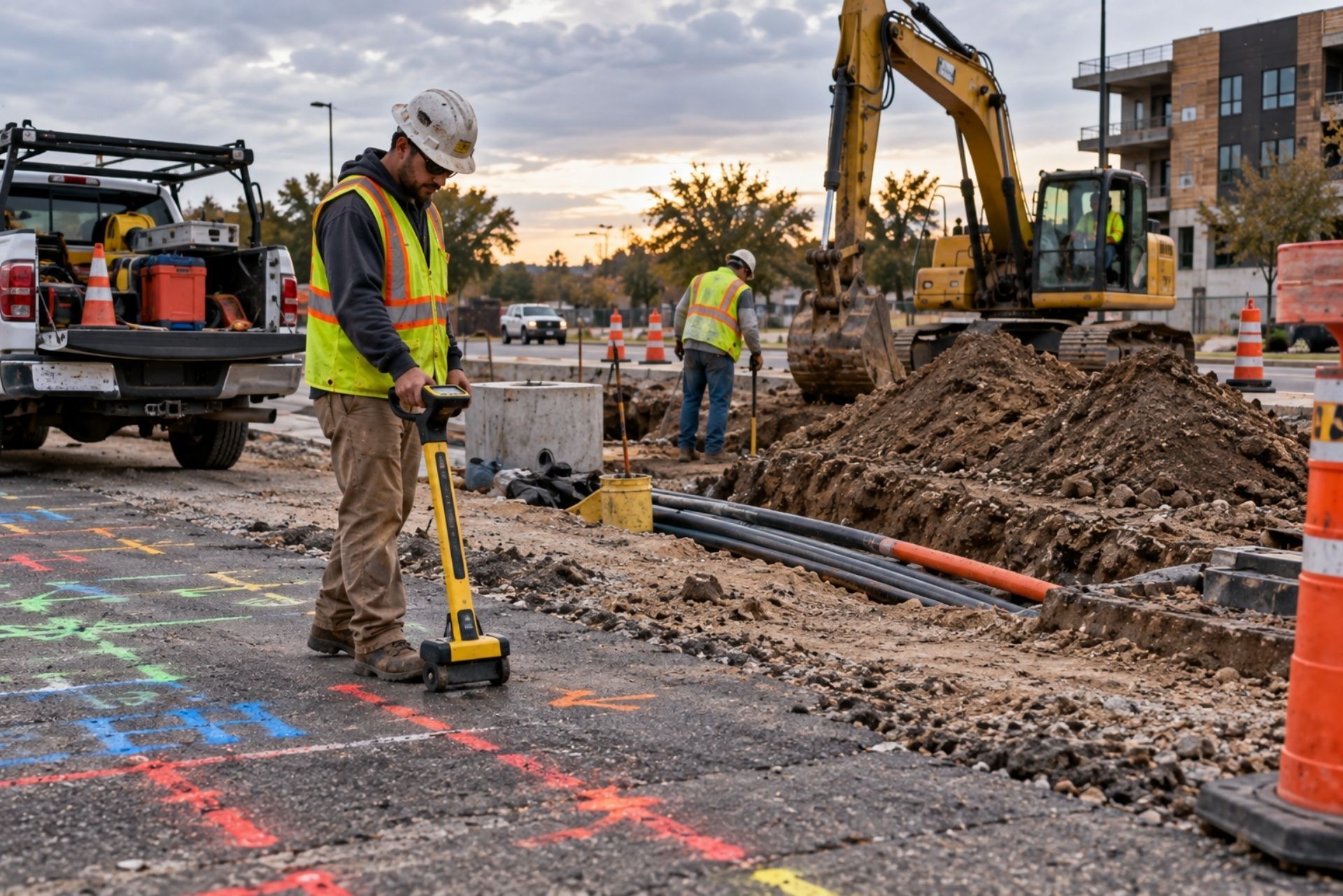
A single utility strike can cost a contractor anywhere from $50,000 to well over $1 million when you factor in property damage, environmental cleanup, regulatory fines, and the inevitable lawsuit. That's before you account for project delays, reputational harm, and potential criminal liability. For utility-locating firms and excavation contractors, insurance isn't just a line item on a bid sheet: it's the difference between surviving a catastrophic claim and closing your doors.
The
insurance requirements embedded in utility-locating and excavation contracts have grown more complex in recent years. Owners, general contractors, and municipalities are demanding higher limits, broader coverage forms, and tighter indemnity language. If you're bidding on projects without a clear understanding of your
general liability, auto, workers' compensation, professional liability, pollution coverage, and indemnity obligations, you're exposing your company to risks that could wipe out years of profit in a single incident. This guide breaks down each coverage type, explains how they interact, and shows you where the gaps tend to hide.
Core Liability Coverage for Utility Locators and Excavators
Every excavation or utility-locating contract starts with a baseline set of insurance requirements. These aren't optional, and they aren't negotiable on most projects. Understanding the purpose and structure of each core coverage line helps you avoid costly surprises when a claim hits.
The three pillars here are general liability, commercial auto, and workers' compensation. Each responds to a different category of risk, and each has its own set of traps for the unprepared.
General Liability: Protecting Against Property Damage and Injury
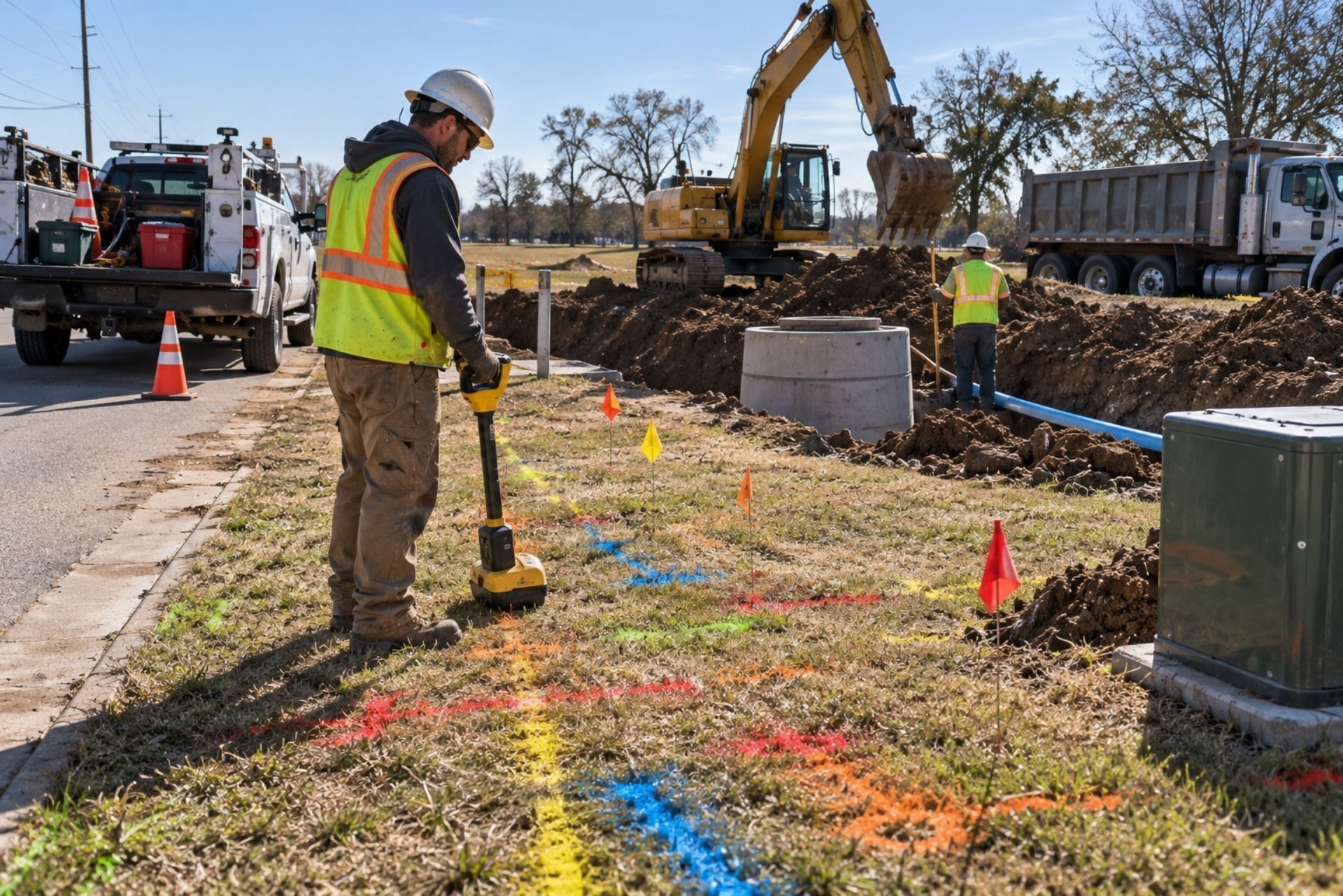
Commercial general liability (CGL) is the foundation of every excavation insurance program. It responds to third-party bodily injury and property damage claims arising from your operations. Think about a backhoe operator who severs a gas line, damages a neighboring building's foundation, or injures a pedestrian near the job site.
Most contracts require a minimum of $1 million per occurrence and $2 million aggregate. High-value municipal or utility-company contracts often push those numbers to $2 million/$4 million or require umbrella coverage on top. Your CGL policy also covers completed operations, meaning claims that arise after you've left the site. This is critical for utility locators whose mapping errors might not surface until months later when someone else digs based on your markings.
One common mistake: assuming your CGL covers professional services. It doesn't. If your locate was wrong because of a calibration error or misinterpretation of ground-penetrating radar data, that's a professional liability claim, not a general liability one.
Commercial Auto: Risks of Mobile Equipment and Fleet Operations
Excavation and locating crews are constantly on the road. Trucks hauling mini-excavators, vac trucks, locate vans loaded with electromagnetic equipment: all of it creates auto liability exposure. The 2026 construction insurance market continues to see commercial auto premiums climb due to rising nuclear verdicts and repair costs.
Most contracts require $1 million combined single limit (CSL) for commercial auto. Some project owners demand hired and non-owned auto coverage as well, especially if your employees ever use personal vehicles for work purposes. Don't overlook inland marine coverage for your specialized equipment either: ground-penetrating radar units, cable locators, and similar gear often aren't covered under a standard auto policy.
Workers' Compensation: Statutory Requirements for Field Crews
Workers' comp is non-negotiable. Every state mandates it (with narrow exceptions for sole proprietors in some jurisdictions), and most contracts require proof of coverage before you set foot on a project. Field crews face real hazards: trench collapses, struck-by incidents, electrical contact with live utilities, and heat-related illness.
Your experience modification rate (EMR) matters here. An EMR above 1.0 signals higher-than-average claims history, and many GCs won't allow subs with an EMR over 1.2 on their projects. Keeping your EMR low requires a genuine safety program, not just a binder of policies collecting dust. Fusco Orsini & Associates works with contractors to structure safety programs that directly influence EMR scores and keep you eligible for the projects that matter.

Specialized Risks: Professional and Pollution Liability
Beyond the core three, utility-locating and excavation contracts increasingly require specialized coverage forms. These policies address risks that standard CGL policies explicitly exclude.
Professional Liability (Errors & Omissions) in Utility Mapping
Utility locators provide a professional service. When your technician marks a gas line two feet from its actual position and a contractor hits it, that's a professional error. Standard CGL policies contain a professional services exclusion, which means you'd have zero coverage for the resulting claim without a separate E&O policy.
Professional liability for underground utility locating typically covers errors in subsurface utility engineering (SUE), mapping inaccuracies, failure to identify existing utilities, and misinterpretation of locate data. Policies generally range from $1 million to $5 million in limits, depending on project size and contractual requirements.
The tricky part is that E&O policies are claims-made, not occurrence-based. That means you need active coverage at the time the claim is reported, not just when the work was performed. If you let your policy lapse, you lose coverage for past work. Extended reporting periods (tail coverage) can protect you, but they cost extra and need to be arranged in advance.
Pollution Liability: Handling Leaks and Environmental Disruptions
Excavation work regularly intersects with environmental risk. Puncturing a fuel line, disturbing contaminated soil, or releasing stored chemicals during trenching can trigger cleanup obligations that run into six or seven figures. Your CGL policy almost certainly contains a pollution exclusion.
Contractor's pollution liability (CPL) fills this gap. It covers third-party bodily injury and property damage from pollution events, cleanup costs, and often regulatory defense expenses. Some policies also cover transportation pollution, which matters if you're hauling contaminated spoils off-site.
For utility-locating firms, pollution exposure might seem minimal, but consider a scenario where your locate miss leads to a contractor rupturing a sewer main that contaminates a nearby waterway. Depending on your contract language, you could be pulled into that claim.
Comparison of Standard vs. Specialized Coverage
Understanding which policy responds to which scenario prevents dangerous assumptions. Here's a quick comparison:
| Coverage Type | What It Covers | What It Excludes | Typical Limit |
|---|---|---|---|
| General Liability (CGL) | Third-party injury, property damage, completed operations | Professional errors, pollution, auto accidents | $1M/$2M |
| Commercial Auto | Vehicle accidents, hired/non-owned auto | Specialized equipment, professional services | $1M CSL |
| Workers' Comp | Employee injuries, occupational illness | Independent contractor injuries | Statutory |
| Professional Liability (E&O) | Locate errors, mapping mistakes, design flaws | Intentional acts, bodily injury (usually) | $1M-$5M |
| Pollution Liability (CPL) | Cleanup costs, environmental damage, regulatory defense | Pre-existing conditions (often), intentional discharge | $1M-$5M |
The gap between CGL and E&O is where most utility-locating claims fall through. If you're carrying only general liability, you're exposed on every locate you perform. Fusco Orsini & Associates regularly audits contractor insurance programs and finds this exact gap, sometimes on policies that have been in place for years without anyone noticing.
Insurance policies only tell half the story. The other half lives in your contract's indemnity provisions and the umbrella or excess limits required to back them up.
Understanding Hold Harmless Agreements
Indemnity clauses shift financial responsibility for losses from one party to another. In excavation contracts, you'll typically see broad form, intermediate form, or limited form indemnification. Broad form requires the subcontractor to indemnify the owner or GC even for the owner's own negligence: a provision that's unenforceable in many states but still appears in contracts regularly.
Intermediate form indemnity, which is the most common enforceable version, requires you to indemnify the other party for losses caused by your negligence, even if they're partially at fault. Limited form only requires indemnity for losses caused solely by your negligence.
Read every indemnity clause carefully before signing. A poorly worded hold harmless agreement can obligate you to cover losses far beyond what your insurance will pay. Your insurance broker should review these clauses alongside your coverage to confirm alignment.
Determining Appropriate Coverage Limits for High-Value Projects
Standard $1 million/$2 million CGL limits work for many projects, but large infrastructure jobs, municipal contracts, and utility-company work often require $5 million or $10 million in total limits. Umbrella or excess liability policies provide this additional capacity at a fraction of the cost of increasing primary limits.
The
2026 construction insurance outlook shows that excess liability pricing has stabilized after several years of steep increases, making it a good time to lock in higher limits. When calculating your needed limits, consider the maximum probable loss on your largest active project, not just the contractual minimum. A $2 million umbrella might satisfy the contract, but if you're working near a high-pressure transmission line in a residential area, the actual exposure could be ten times that.
Common Questions About Utility Insurance
Do I need pollution liability if I'm only doing utility locating, not excavation? Yes, in many cases. If your locate error leads to a pollution event caused by another contractor, you could be named in the claim. Your contract language determines your exposure.
Can I use a certificate of insurance (COI) from my old policy to bid on a new project? No. COIs must reflect current, active coverage. Submitting an expired or inaccurate COI can result in bid disqualification and potential fraud allegations.
What happens if my workers' comp EMR is too high? Many GCs set EMR thresholds between 1.0 and 1.2. Exceeding that threshold can disqualify you from bidding. Improving your EMR takes 2-3 years of consistent safety performance.
Does Ohio require any special notice before excavation? Yes. Ohio's updated "One Call" law requires excavators to provide notice at least two full working days before digging and extends locate ticket validity. Similar laws exist in every state, though timelines and definitions vary.
Should I carry claims-made or occurrence-based professional liability? Most E&O policies are claims-made only. The key is maintaining continuous coverage and considering tail coverage if you ever cancel or switch carriers.
How do umbrella policies interact with my primary coverage?
Umbrella policies sit above your CGL, auto, and employers' liability limits. They kick in once primary limits are exhausted. Some umbrellas also drop down to cover claims excluded by underlying policies, but this varies by carrier.
What This Means for Your Business
Getting your insurance program right isn't a one-time task. Contracts evolve, project scopes change, and the regulatory environment shifts from state to state. A coverage gap that didn't matter on last year's small residential locate job could bankrupt you on this year's DOT highway project.
Start by auditing your current policies against the contracts you're actually signing. Compare your CGL, auto, workers' comp, E&O, and pollution limits to the indemnity obligations you've agreed to. If there's daylight between what your contract requires and what your policy covers, you have a problem that needs fixing before the next claim.
Fusco Orsini & Associates specializes in building insurance programs for contractors in the utility-locating and excavation space. If you're unsure whether your current coverage matches your contractual obligations, request a contract-to-policy review. The cost of an hour with a knowledgeable broker is nothing compared to the cost of discovering a gap after a loss.
About The Author:
Michael Fusco
As CEO and Principal of Fusco Orsini & Associates, I’m dedicated to helping businesses and individuals achieve peace of mind through smarter insurance solutions. With extensive experience in commercial insurance and risk management, I focus on building long-term relationships and providing clarity, trust, and value in every policy we deliver.
// Coverage for Your Company
Protect Your Business, Employees, and Assets
We help business owners protect their companies from risks that can disrupt operations or threaten growth. Our team explains your options clearly and guides you to the right coverage for your business.
// Who We Help
Focused Insurance for Your Industry
We understand the unique risks and needs of different industries. Our team provides clear guidance and customized coverage to help you operate with confidence.


// Coverage for Individuals and Families
Protect What Matters Most at Home and Beyond
Renters Insurance
Affordable protection for your personal property in a rented space.
Life Insurance
Ensure your loved ones are financially secure when they need it most.
Umbrella Insurance
Extra liability coverage to protect you beyond standard policies.

// Frequently Asked Questions
Clear Answers to Common Questions

5.0 Reviews on Google
What You Need to Know Before Getting Started
People often ask us about the most common questions around business consulting, insurance, and employee benefits.
What types of insurance does my business need?
We evaluate your operations, identify risks, and explain the policies that make sense for your business. Our goal is to help you understand what you’re buying and ensure nothing important is overlooked.
The right coverage depends on your industry, size, and exposures. We’ll walk you through each option and help you make a confident decision.
Do you provide employee benefits?
Yes. Our dedicated benefits team offers group health, dental, vision, life, and disability plans. We also help employees with claims and explain how to use their benefits effectively.
We design plans that meet your company’s goals while keeping costs manageable and ensuring employees feel supported.
Do you only serve clients in California?
No. While we are based in San Diego, California, we work with clients in 31 states across the country.
We have the licenses and experience to support businesses of all sizes wherever they operate.
Can you review my existing policies?
Absolutely. We offer policy reviews at no cost to you. We’ll look for gaps in coverage, overlapping policies, and opportunities to save money.
Our team makes transitioning from your current provider simple and seamless.
How quickly can I get a quote?
In most cases, we respond the same business day with clear options and next steps.
We know that time matters, and we work efficiently to provide you with answers and coverage without unnecessary delays.
// What Our Clients Say
Reviews from Business Owners Like You
Over 500 Five-Star Ratings Across Platforms
// Business Tips & Resources
Helpful Articles for Business Owners
Our blog offers clear advice to help you protect your business, support your employees, and plan for the future with confidence.


Contact Us
Phone
Location