




A technician on a ladder, a bundle of fiber in hand, is not just restoring internet for a single family. That worker is keeping a massive economic machine online. The U.S. cable industry alone generates about 568.7 billion dollars in total economic output and supports roughly 1.3 million jobs nationwide, according to
data from NCTA. When that kind of infrastructure runs through rooftops, poles, attics, crawl spaces, and busy streets, the risk picture gets complicated fast.
What Telecom And Cable Installers Actually Do (And Why It Matters For Insurance)
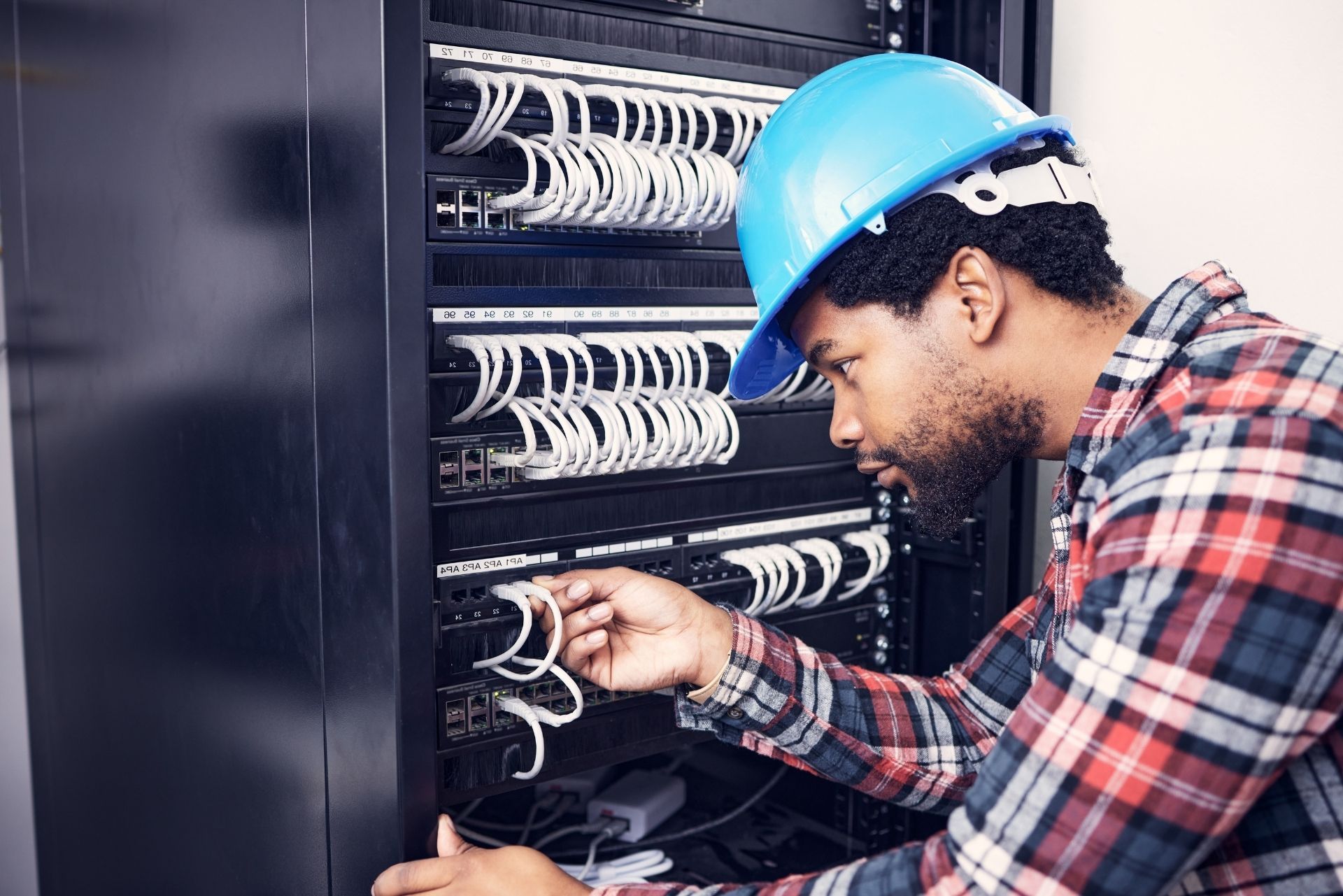
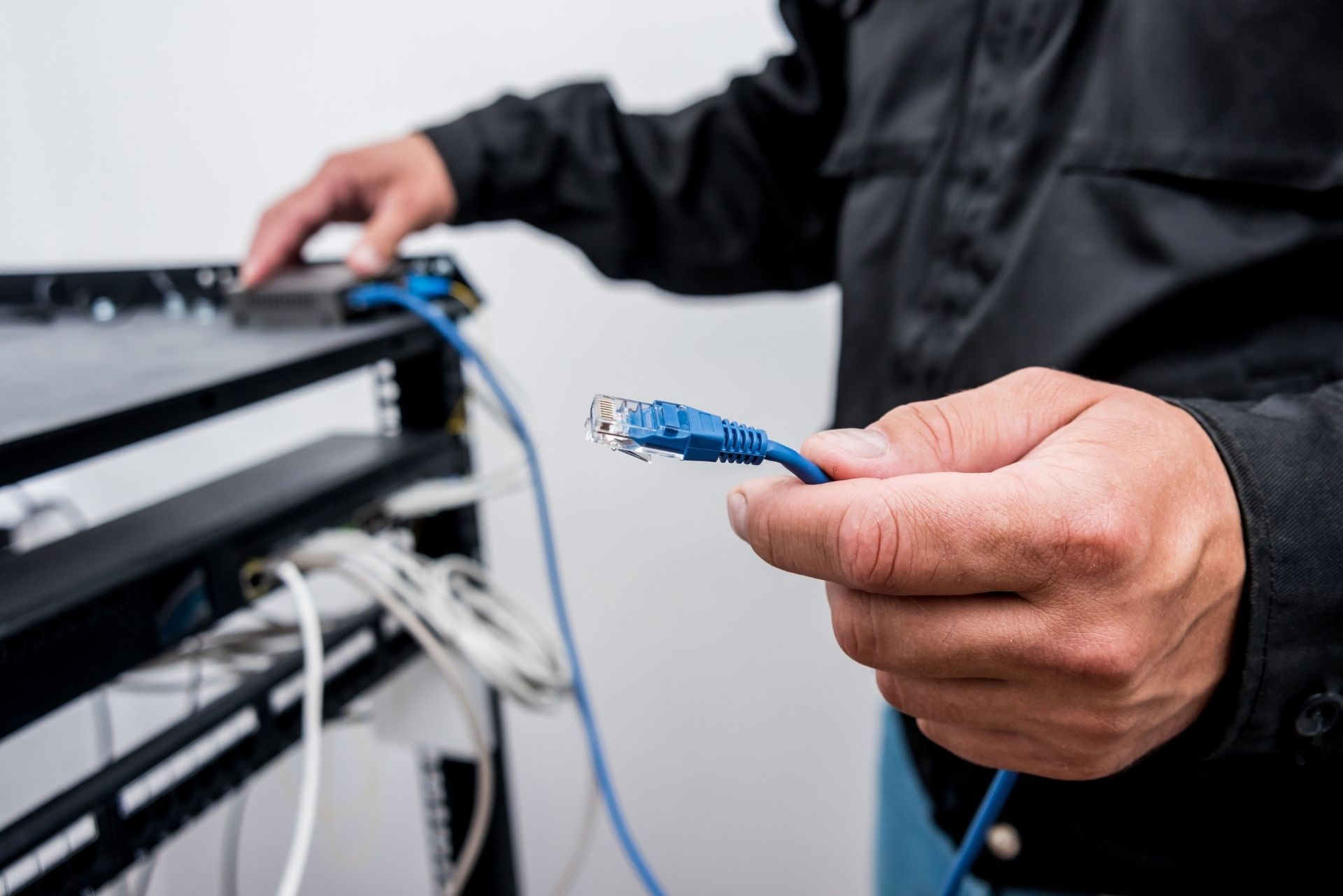
Telecom and cable installers in California handle far more than simple modem swaps. They run lines through walls and ceilings, splice fiber in cramped utility closets, climb poles, navigate bucket trucks through tight neighborhoods, and work inside homes and businesses filled with expensive property. Every visit to a customer site combines physical labor, technical work, and close contact with a space the customer cares about.
On top of that, a lot of this work happens under time pressure. Service outages trigger urgent calls, and installers may be asked to work in high heat, heavy rain, smoky conditions, or late-night windows. Rushing, distractions, and long days raise the odds of mistakes, from a dropped ladder to a cracked tile floor or damaged server rack. Insurance has to account for this blend of physical hazard and customer property exposure.
Many contractors also participate in large build outs, network upgrades, or post-disaster restoration. Those projects may involve subcontractors, general contractors, public entities, or major telecom brands. Contracts in those settings often dictate specific coverage limits, additional insured wording, and waiver requirements that go well beyond a basic business policy. Without the right structure, a single clause in a
master service agreement can leave a small contractor holding unexpected liability.

Core Insurance Policies Telecom And Cable Installers Need
Most California installers, whether they are solo technicians or growing firms with crews and trucks, end up with a similar core set of policies. The exact limits and endorsements vary by operation, but the building blocks stay fairly consistent. The goal is simple. Protect people, protect property, and make sure one accident does not derail future contracts or the business itself.
Understanding what each coverage actually does helps avoid surprises when a claim hits. It also makes conversations with brokers and underwriters much more productive. Instead of just asking for a generic contractor package, a telecom or cable installer can explain their work mix, the systems they touch, and the contracts they need to satisfy.
General Liability Insurance
General liability is usually the first policy required in a contract. It addresses claims where a customer or member of the public alleges bodily injury or property damage caused by the installer. Think about a tech who bumps a large television off its mount, an extension ladder that hits a parked car, or someone tripping over a cable drum on a sidewalk.
This coverage also often includes personal and advertising injury protections, which can come into play around libel, slander, or certain marketing disputes. For many telecom contractors, the most meaningful part of general liability is the ability to add clients as additional insureds and satisfy indemnity language in master agreements. Without that, it is hard to get onto vendor lists for major carriers or construction projects.
Workers Compensation Insurance
Whenever employees climb, drive, lift, or work with power tools, the chance of injury is real. Workers compensation is what steps in when an employee strains a shoulder while pulling coax through a tight attic or falls from a ladder while mounting an antenna. It pays for medical bills and a portion of lost wages, and it helps limit lawsuits from injured employees.
California has strict requirements around workers compensation for employers. Even very small telecom and cable outfits that rely on a handful of field techs often need this policy to comply with state law and to keep access to jobs that require proof of coverage. For companies using independent contractors, it is also important to understand how misclassification can turn into unexpected workers compensation exposure.
Commercial Auto Insurance
Telecom and cable installers live out of their vehicles. Vans and pickup trucks carry ladders, test equipment, reels of cable, and sometimes expensive electronics. Commercial auto coverage responds if a driver causes an accident that injures someone or damages another vehicle or building. It also can protect the business if a covered vehicle is stolen or vandalized, depending on the options selected.
Many project owners want evidence of commercial auto with specific liability limits before letting a contractor drive onto a jobsite. Personal auto policies often exclude business use or vehicles titled in a business name, so relying on them for work trucks can leave a dangerous gap. Commercial policies can also add hired and non owned auto coverage for situations where employees use their own cars on the job.
Property And Inland Marine (Tools And Equipment)
From fusion splicers to signal meters and laptops loaded with configuration software, telecom gear is not cheap. Standard business property insurance can help protect gear stored at the office, while inland marine or contractor equipment coverage is designed for items that travel or live on job sites and in vehicles. This becomes crucial when a truck break in wipes out a whole kit of tools and electronics overnight.
For installers that own portable generators, small trailers, or temporary network equipment used on event sites, inland marine can often be tailored to follow that property. The key is keeping schedules of equipment updated and making sure limits reflect replacement cost for specialty tools, not just rough estimates based on basic hand tools.
Professional Liability / Errors And Omissions
Telecom and cable work has a strong technical component. A misconfigured router, poorly designed cabling layout, or incorrect fiber splice can bring down a customer’s operations, even if no one gets hurt and nothing tangible is broken. That kind of purely financial loss is the territory of professional liability, also known as errors and omissions coverage.
For installers involved in network design, system integration, or complex commercial set ups, this coverage can be just as important as general liability. Many sophisticated customers now require it for vendors who touch mission critical communications, since downtime can quickly lead to lost revenue and contractual penalties.
Commercial Umbrella Or Excess Liability
Larger contracts, especially with national telecom brands or public entities, often demand higher liability limits than a base policy provides. Commercial umbrella or excess liability coverage sits on top of general liability, auto liability, and sometimes employers liability. When a serious claim pierces the primary limits, the umbrella can provide additional protection.
For a California installer bidding on municipal fiber projects or large multi dwelling unit builds, an umbrella policy can be the difference between qualifying for the work and being locked out. It also offers peace of mind when crews are working around dense traffic, high value properties, or crowds where a single accident might create numerous injury claims.
| Coverage Type | What It Typically Protects | Why It Matters For Low Voltage Work |
|---|---|---|
| General Liability | Bodily injury and property damage to others, plus some personal and advertising injury claims. | Covers incidents like a ladder accident, water damage from drilling, or a damaged finished surface while pulling cable. |
| Professional Liability / Errors and Omissions | Claims arising from design, specification, or technical mistakes in professional services. | Critical when clients rely on the contractor to design, program, or configure networks and systems. |
| Workers Compensation | Medical costs and lost wages for employees who suffer work-related injuries or illnesses. | Required by California law for employees and essential for ladder work, confined spaces, and field installations. |
| Commercial Auto | Liability and physical damage for vehicles used in the business. | Protects vans and trucks carrying ladders, testers, patch cords, and expensive devices between job sites. |
| Inland Marine / Tools and Equipment | Movable tools, testers, laptops, spools, and sometimes temporary installations. | Helps after theft from a job trailer or damage to key testing equipment. |
| Property | Buildings, offices, and inventory kept at a fixed location. | Matters for contractors with warehouses, staging areas, or stocked material for frequent projects. |
| Cyber Liability | Certain data breaches, network intrusions, and related costs like notification or forensic work. | Important when contractors manage remote access, credentials, or cloud connected devices for clients. |
California Specific Risks For Telecom And Cable Installers
California is not an average market for telecom and cable risk. The state combines wildfire exposure, dense urban areas, rugged terrain, and a high level of public dependence on connectivity. When internet or video service goes down, customers notice fast. That urgency pushes technicians into tough environments, sometimes under less than ideal conditions.
Physical attacks on communications infrastructure are also a growing concern. Between June 2024 and June 2025, there were 15,540 incidents of theft and vandalism affecting communications infrastructure nationwide, disrupting service for more than 9.5 million customers according to NCTA reporting. Installers may not always own the targeted equipment, but they are often the ones dispatched to restore service, sometimes to locations that have just been hit by thieves or vandals.
California carries a disproportionate share of those incidents. The state accounted for 6,003 infrastructure theft and vandalism cases, roughly 38.7 percent of all recorded attacks nationwide in that same period, based on analysis from Wireless Estimator. That kind of environment raises questions about how tools, vehicles, and even employee safety are protected, especially for crews working at night or in remote locations.
Wildfire risk adds another layer. Damage to poles, aerial lines, customer premises equipment, and network hubs can be extensive in areas hit by fire or heavy smoke. Installers often help rebuild or reroute service during the recovery phase, when roads may still be hazardous and structures unstable. Insurance coverage for business property, inland marine, and even business interruption becomes far more important in a state where widespread disasters are a recurring reality.
How California’s Insurance Market Affects Telecom And Cable Businesses
Even the best risk management plan still runs into the realities of the California insurance market. Homeowners coverage in the state has been under heavy strain, and some of those pressures spill over into commercial lines and contractor programs. One underlying issue is how long it can take regulators to approve rate filings. Between early 2017 and late 2020, the average time to issue a rate filing decision in California was 160 days for non intervened filings and 337 days for intervened filings, according to research from the Independent Institute.
Delays did not stop there. The average approval time for a homeowners rate filing in the state rose from just over 100 days in 2012 to more than a year by 2023, based on the same Independent Institute analysis. When insurers cannot adjust pricing or terms quickly in response to growing loss costs, they tend to restrict capacity, non renew more policies, or tighten underwriting guidelines. While that data focuses on homeowners, the ripple effects often touch commercial risks like telecom contractors, especially in wildfire exposed or hard to place regions.
Rising rebuilding costs are another driver. The price of construction inputs in California has climbed by almost 40 percent since the beginning of the pandemic, according to the Independent Institute. That increase affects everything from replacing burned utility sheds to rebuilding damaged offices, and it feeds into higher limits and premiums for property and inland marine coverage carried by telecom and cable installers.
There is also a persistent problem with underinsurance after catastrophes. Between 2003 and 2024, the California Department of Insurance received 888 consumer complaints from wildfire survivors about being underinsured, according to a San Francisco Chronicle investigation. While those complaints center on homeowners, they highlight how easy it is for coverage limits to lag behind real replacement costs. Telecom and cable businesses face the same risk if they fail to update values for vehicles, tools, inventory, and office or warehouse improvements.
Regulatory timelines add one more complication. From 2018 through 2022, the five year average delay for rate change decisions in California was 236 days, the second longest in the country, again according to the
Independent Institute. That kind of lag encourages insurers to be cautious when taking on new risk. Telecom and cable contractors may find fewer carrier options, more rigorous underwriting questions, or requirements to bundle coverages to secure terms that used to be routine.
How These Policies Respond In Real Telecom And Cable Claims
Putting policy names on a checklist is easy. What matters is how they respond when something actually happens in the field. Telecom and cable installers tend to see certain patterns of claims, and matching those patterns to coverage helps make sure there are no gaps.
On routine residential jobs, the most common issues often involve property damage. A misplaced drill bit can puncture a water line, leading to soaked drywall, damaged flooring, and angry customers. General liability handles the cost to repair or replace that property and defend the installer if a lawsuit gets filed. If a pre existing condition is blamed on the work, a clear description of the job scope and before and after photos can be critical in showing exactly what the crew did.
In commercial settings, especially in server rooms or data centers, even a minor mishap can be expensive. Pulling the wrong cable or disconnecting power to critical hardware might trigger downtime across a business. If physical damage occurs, general liability may respond. If the loss is purely financial due to misconfigured equipment or flawed design, professional liability is usually the coverage that addresses those allegations.
Vehicle claims are another constant. A distracted driver backing a loaded van into a luxury car in a tight parking lot turns into an auto liability and physical damage claim. If employees regularly take vehicles home or use personal cars for service calls, it is important to confirm how those scenarios are handled by the commercial auto policy. Unclear arrangements can leave both the business and the driver exposed.
Then there are theft and vandalism scenarios. In a state with thousands of documented attacks on communications infrastructure, installers may arrive to find damaged equipment, cut lines, or stolen copper and electronics. Inland marine and property coverage can help the business recover the value of its own gear, while liability policies respond if customers or other parties allege negligence in securing or maintaining the site.
What Drives The Cost Of Telecom And Cable Installer Insurance In California
Premiums for telecom and cable installer insurance are not random. Underwriters look at a mix of factors tied to the work itself, the geography, and the company’s internal controls. While each carrier has its own formulas and appetite, certain themes show up again and again when accounts are priced and reviewed.
The type of work performed is a major factor. Installers focused on single family residential jobs usually present a different risk profile than contractors working on cell towers, high rises, or large industrial facilities. The amount of climbing, the use of bucket trucks, the presence of energized equipment, and the complexity of the systems all influence how insurers view the operation.
Location matters as well. Businesses based in or serving wildfire prone regions or high crime urban corridors may face higher property and inland marine premiums. Carriers study where vehicles are garaged, where equipment is stored overnight, and how often crews work in areas with a history of theft or vandalism. The statewide data showing California’s outsized share of infrastructure attacks gives underwriters more reason to dig into these details.
Loss history has a big impact. A clean record with only minor incidents signals that the company manages risk and trains employees well. A cluster of ladder falls, auto accidents, or property damage claims tells a different story. Underwriters often ask about what the company has changed after a claim, such as new safety protocols, driver training, or equipment upgrades, before deciding how to price or whether to renew.
Contract requirements influence limits and sometimes even which carriers are willing to participate. Large telecom brands, municipalities, and prime contractors often require higher limits, specific endorsements, or certain financial ratings from insurers. Meeting those terms can increase both premium and administrative work, but it can also open the door to more stable, higher value projects.
| Coverage Type | What It Mainly Protects | Typical Telecom / Cable Claim Example |
|---|---|---|
| General Liability | Customer bodily injury and property damage | Technician cracks expensive flooring while fishing cable through a wall in a home |
| Workers Compensation | Employee injuries, medical bills, and a portion of lost wages | Crew member falls from a ladder while installing an antenna on a roof |
| Commercial Auto | Liability from at-fault accidents and damage to insured vehicles | Service van rear ends another vehicle on the freeway while heading to a job |
| Inland Marine / Contractor Equipment | Tools, test equipment, and portable gear on the road or job site | Truck break in results in stolen fusion splicer, meters, and power tools |
| Professional Liability | Claims of mistakes in design, configuration, or technical services | Improperly configured switch causes major downtime for a commercial client |
| Commercial Umbrella | Additional limits over general liability and auto liability | Serious accident involving a bucket truck creates multiple injury claims exceeding primary limits |
Practical Steps To Get And Keep The Right Coverage
Good insurance for telecom and cable installers is not just about buying a policy once and filing the certificate away. It is a process that tracks how the business changes over time. That means being proactive, especially in a complex market like California where carrier appetites and regulations can shift.
A useful starting point is mapping out the full scope of work. List the types of projects handled, the biggest customers, the highest risk tasks, and any specialty services provided, such as fiber splicing, tower work, or network design. Sharing that with an experienced commercial broker helps avoid being misclassified as a generic contractor or, worse, being placed with a carrier that does not truly understand telecom exposures.
Next, align insurance with contracts. Before signing a master service agreement or large job contract, compare the insurance requirements to current policies. Look for differences in limits, additional insured language, primary and non contributory wording, and waiver of subrogation requests. Adjusting coverage before something is signed is far easier than scrambling to fix gaps after work has already started.
Keeping schedules and limits updated matters, especially for equipment. As new trucks, ladders, test kits, and specialty tools are added, they should be reported so coverage keeps pace with actual exposure. The spike in construction and replacement costs seen across California in recent years makes underreported values a particularly expensive mistake.
Finally, treat claims and near misses as learning tools. After an incident, review what happened, how the policies responded, and what could be changed to reduce the chance of a repeat. Carriers tend to look favorably on businesses that can demonstrate a concrete response to past losses, whether through new training, better checklists, or investments in safer equipment.
Frequently Asked Questions About California Telecom And Cable Installer Insurance
Telecom and cable contractors across California tend to ask similar questions when they start digging into their insurance. The answers below give a general picture, but actual decisions should always be made with a licensed insurance professional who understands the specific business.
Is general liability alone enough for a small cable installation business?
General liability is essential, but it usually is not enough by itself. Even small shops often need workers compensation, commercial auto, and some form of tools and equipment coverage, especially when they are driving to jobs daily and carrying expensive gear.
How does California’s wildfire risk affect telecom and cable insurance?
Wildfires increase the chance that offices, warehouses, and stored equipment are damaged or destroyed, and they also lead to more rebuild projects where installers work in hazardous conditions. The long list of wildfire underinsurance complaints documented by the San Francisco Chronicle is a reminder to check that property and inland marine limits reflect true replacement costs.
Do I need professional liability if I only follow installation specs from the client?
Even when the client provides plans, installers often make small field decisions or interpret ambiguous instructions. If a client claims that work contributed to downtime or system failure, professional liability coverage can help defend against those allegations, regardless of who drew the original design.
Why are carriers asking so many questions about theft and vandalism risk?
The recent spike in documented attacks on communications infrastructure and service disruptions highlighted by NCTA data has made underwriters more sensitive to where and how equipment is stored and used. They want to understand yard security, vehicle garaging, and jobsite practices before deciding on pricing and terms.
How often should a telecom installer review insurance coverage?
A yearly review is a good minimum, but coverage should also be revisited whenever the business adds crews, takes on new types of projects, buys significant equipment, or signs a major new contract. Regular check ins help avoid the kind of underinsurance problems that only become obvious after a loss.
Can a single claim make it hard to renew coverage in California?
A single minor claim usually is not a deal breaker, but repeated or severe losses can make renewal more challenging in a state where the overall insurance market is already stressed. Showing clear steps taken to prevent similar incidents in the future can make a big difference in how underwriters view the risk.
About The Author:
Michael Fusco
As CEO and Principal of Fusco Orsini & Associates, I’m dedicated to helping businesses and individuals achieve peace of mind through smarter insurance solutions. With extensive experience in commercial insurance and risk management, I focus on building long-term relationships and providing clarity, trust, and value in every policy we deliver.
// Coverage for Your Company
Protect Your Business, Employees, and Assets
We help business owners protect their companies from risks that can disrupt operations or threaten growth. Our team explains your options clearly and guides you to the right coverage for your business.
// Who We Help
Focused Insurance for Your Industry
We understand the unique risks and needs of different industries. Our team provides clear guidance and customized coverage to help you operate with confidence.


// Coverage for Individuals and Families
Protect What Matters Most at Home and Beyond
Renters Insurance
Affordable protection for your personal property in a rented space.
Life Insurance
Ensure your loved ones are financially secure when they need it most.
Umbrella Insurance
Extra liability coverage to protect you beyond standard policies.

// Frequently Asked Questions
Clear Answers to Common Questions

5.0 Reviews on Google
What You Need to Know Before Getting Started
People often ask us about the most common questions around business consulting, insurance, and employee benefits.
What types of insurance does my business need?
We evaluate your operations, identify risks, and explain the policies that make sense for your business. Our goal is to help you understand what you’re buying and ensure nothing important is overlooked.
The right coverage depends on your industry, size, and exposures. We’ll walk you through each option and help you make a confident decision.
Do you provide employee benefits?
Yes. Our dedicated benefits team offers group health, dental, vision, life, and disability plans. We also help employees with claims and explain how to use their benefits effectively.
We design plans that meet your company’s goals while keeping costs manageable and ensuring employees feel supported.
Do you only serve clients in California?
No. While we are based in San Diego, California, we work with clients in 31 states across the country.
We have the licenses and experience to support businesses of all sizes wherever they operate.
Can you review my existing policies?
Absolutely. We offer policy reviews at no cost to you. We’ll look for gaps in coverage, overlapping policies, and opportunities to save money.
Our team makes transitioning from your current provider simple and seamless.
How quickly can I get a quote?
In most cases, we respond the same business day with clear options and next steps.
We know that time matters, and we work efficiently to provide you with answers and coverage without unnecessary delays.
// What Our Clients Say
Reviews from Business Owners Like You
Over 500 Five-Star Ratings Across Platforms
// Business Tips & Resources
Helpful Articles for Business Owners
Our blog offers clear advice to help you protect your business, support your employees, and plan for the future with confidence.
Contact Us
Phone
Location