


Does General Liability Cover Pollution? Guide for Contractors and Small Businesses
See How We're Different
or call us: (858) 384‑1506
Most general liability policies exclude pollution claims, which means routine jobsite incidents may not be covered.

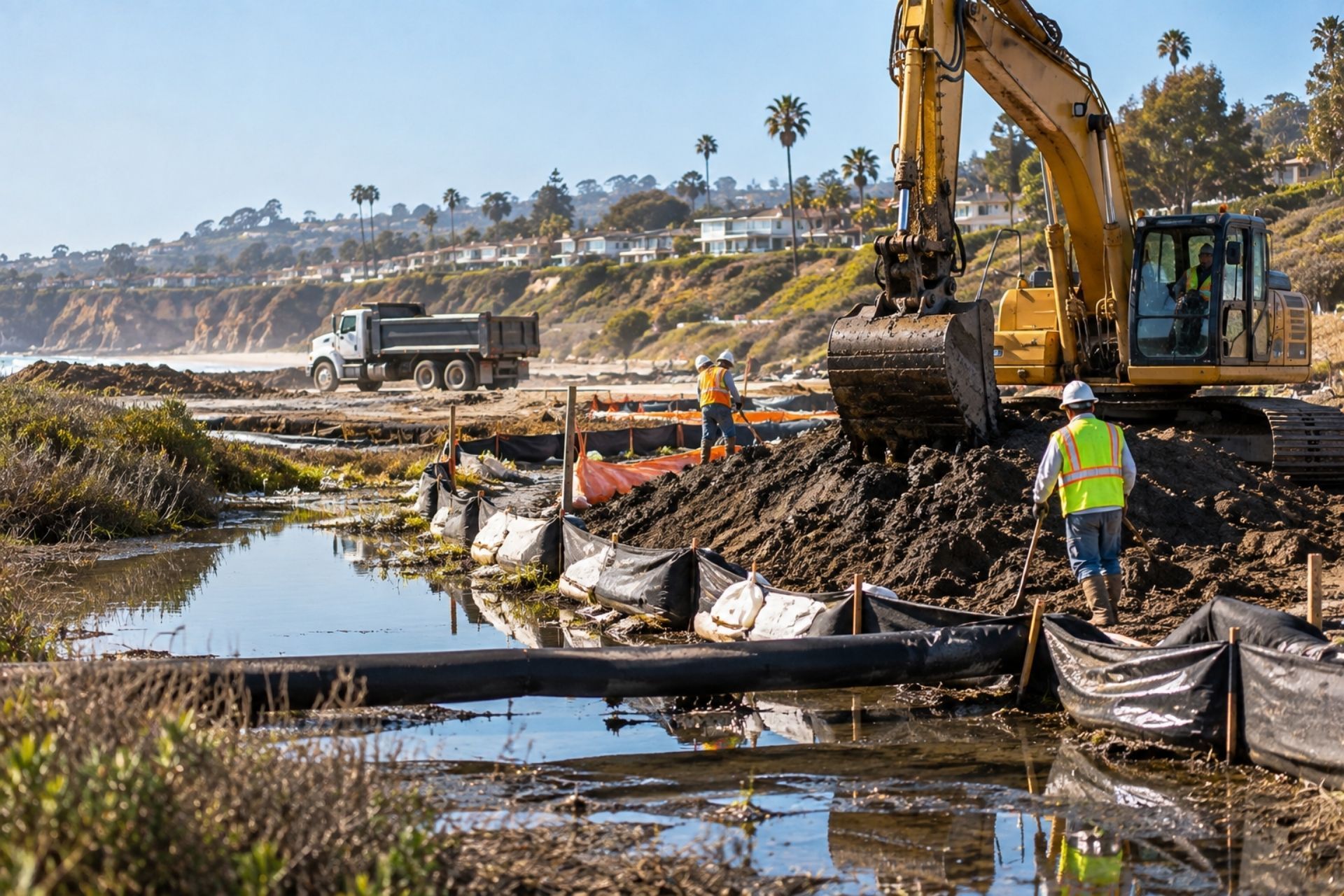
When SMB owners or contractors hear “environmental exposure,” they often picture a refinery spill. But in reality, most environmental claims come from routine, everyday operations. Here are a few practical examples:
- Diesel spill while refueling
- Slurry entering a storm drain
- VOC fumes entering an adjacent tenant space
- Refrigerant release during HVAC service
Environmental liability is not about labeling businesses as “polluters.” It is about protecting your business if materials such as paint, fuel, or debris accidentally end up where they should not.
It is important to supplement your general liability and commercial property insurance with additional environmental liability coverage. Here’s why.
Most general liability policies include a total pollution exclusion. This means they usually do not pay for harm to air, water, or land caused by pollution from your business. Environmental liability policies, also called Pollution Liability or Contractors Pollution Liability, are specialized insurance policies that help cover these risks.
To better understand how these exposures might affect your business, here are more examples of environmental liability:
Environmental liability can arise when pollution occurs during routine operations, such as waste-disposal failures, fuel or chemical spills, emissions, contamination from storage tanks, mold issues, paint overspray, exposures during transportation, and more. Liability can also result from operating or owning contaminated sites, as well as from incidents involving suppliers or subcontractors.
Let’s look at the potential consequences small businesses may face due to environmental exposures:
- Clean up and remediation costs
- Third-party property damage and associated costs
- Regulatory involvement and fines from the Environmental Protection Agency
- Legal defense
- Operational disruptions or shutdowns
For contractors, these risks carry particular importance:
If you’re a contractor, contracts often place pollution responsibility on you. It’s so important to ensure that your insurance matches your contract requirements. And remember, most claims arise from routine work, not rare events, so having coverage is key!
To proactively manage environmental risks, small businesses and contractors should consider the following:
1. Look at Where Materials are Stored, Moved, Disturbed, and Disposed of:
- Where are materials stored?
- What fuels, chemicals, dust, or waste does your business generate?
- Where could leaks, spills, migration, or runoff occur?
- Who is responsible at each step?
- Are you conducting workforce training that covers this?
2. Prepare for First Response
Maintain a prompt and controlled emergency response plan and business continuity plan.
3. Review Contracts Carefully
Review your contracts for broad pollution indemnification language, cleanup obligations regardless of fault, and requirements for Contractors' Pollution Liability coverage.
4. Vet Your Subcontractors
You could inherit subcontractor risks, so request and review Certificates of Insurance (COIs) for pollution coverage, waste-handling responsibilities, and documented waste-handling procedures.
5. Review Your Insurance
Review your insurance coverage to make sure you are protected if you cause or face environmental losses. These include accidental pollution and contamination (when unwanted substances enter the environment). Ask your broker about Pollution Liability or Contractors' Pollution Liability insurance, which can help cover costs related to pollution events.
At Fusco Orsini & Associates, we often recommend anEnvironmental Liability Package, which includes General Liability, Pollution Liability, and (sometimes) Professional Liability for remediation contractors, such as those handling water and mold mitigation.
6. Document Everything
Keep records of disposal manifests (documents tracking waste), training logs, jobsite inspections, and spill response actions. For more on what to do in the 48 hours after a claim,see our guide.
7. Conduct Due Diligence
Conduct due diligence on sites, properties, legacy contamination, and supply chain activities.
8. Know the Law
Routinely review your business’s responsibilities under local, state, and federal environmental regulations (laws and rules about protecting the environment). Also, conduct periodic environmental audits (checks to identify possible environmental problems) to reduce risks.
While this guide doesn’t cover everything, it does outline several steps you can take to prepare your business for potential environmental risks and responsibilities. If you’d like a hand getting ahead of it, please contact our brokers who help SMBs and contractors understand their policies and improve their risk strategies daily.
Sources:
Zywave: Risk Insights - Understanding Environmental Liability Exposures for Businesses
AI Disclosure:
Portions of this content were generated with the assistance of ChatGPT (OpenAI) on February 24, 2026, and reviewed by our insurance team for accuracy.
Disclaimer:
This information is intended for reference only and should not be considered as financial or legal advice. Consult with a qualified professional for personalized guidance.

Recent Post