



XCU Insurance for Excavation and Underground Utility Contractors

or call us: (858) 384‑1506
A single utility strike can turn a routine excavation job into a six-figure liability nightmare. Underground utility damage alone costs the
U.S. economy $83.2 billion annually, a figure that's nearly tripled in recent years. If you're an excavation or underground utility contractor, the insurance protecting your business needs to match the scale of these risks. XCU coverage, which addresses explosion, collapse, and underground hazards, is the specific protection that fills the gaps your standard general liability policy likely ignores. Without it, a gas line rupture, a foundation crack, or a sinkhole forming weeks after your crew has left the site could bankrupt your operation. This guide breaks down how XCU works, what the CG 21 42 exclusion actually removes from your policy, how completed operations factor in, and what real claim scenarios look like for contractors doing this kind of work. Whether you're bidding on municipal projects or running private utility installations, understanding these coverage mechanics isn't optional: it's how you stay in business.
Understanding XCU Hazards in General Liability Policies
XCU hazards represent three distinct categories of risk that standard commercial general liability (CGL) policies have historically treated with suspicion. For contractors who dig, bore, blast, or work near underground infrastructure, these hazards aren't theoretical. They're the core of your daily operations. Insurers developed specific classifications for these risks because the potential for catastrophic loss is high and the frequency of incidents, especially among excavation and utility contractors, far outpaces most other trades.
Defining Explosion (X), Collapse (C), and Underground (U) Risks
The "X" covers explosion hazards: think gas line ruptures, accidental ignition of volatile materials, or blasting operations that damage nearby property. The "C" addresses collapse, which includes structural failure of buildings, retaining walls, or earth support systems caused by your work. The "U" refers to underground property damage, covering sewer lines, water mains, fiber optic cables, and other buried utilities you might strike or disturb during excavation. Each of these carries its own loss profile, and insurers price them differently based on your specific operations.
Why Excavation and Utility Contractors Face Unique Exposures
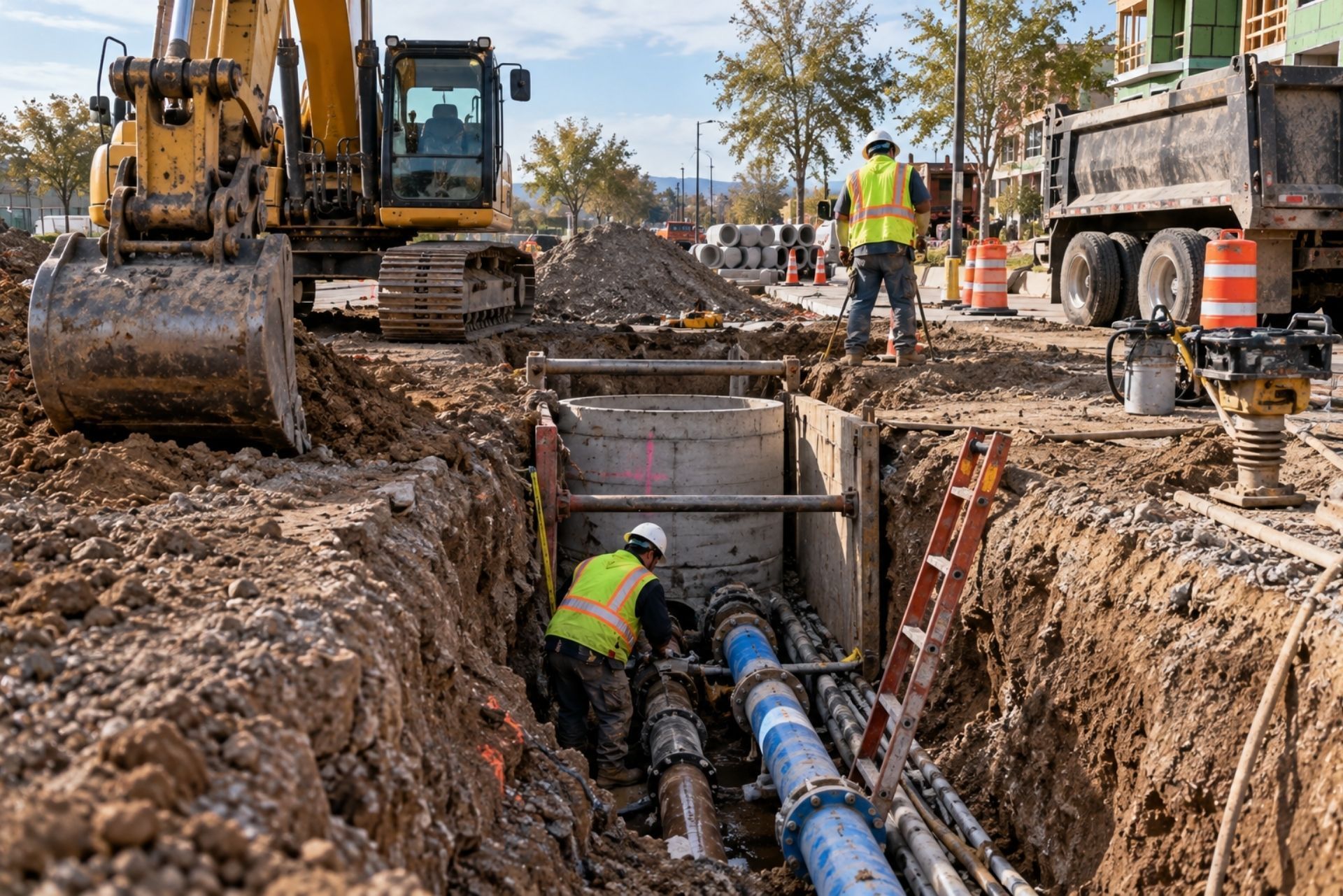
Your work happens below grade, where conditions are unpredictable and existing infrastructure is often poorly mapped. Even with 811 locate services,
utility strike incidents remain alarmingly common across the country. Soil conditions shift. Old utility maps are inaccurate. A horizontal directional drill can miss a locate mark by inches and still rupture a high-pressure gas main. These aren't edge cases: they're the everyday realities that make XCU coverage essential for your trade.

The Impact of CG 21 42 and Common Policy Exclusions
The
CG 21 42 endorsement is one of the most consequential exclusions an
excavation contractor can find buried in their policy. Many contractors don't even realize it's there until a claim gets denied.
How CG 21 42 Removes Your Core Business Protection
CG 21 42, formally titled "Exclusion - Explosion, Collapse and Underground Property Damage Hazard," strips your CGL policy of coverage for the exact risks your business creates. If this endorsement is attached, your insurer won't pay for property damage caused by blasting, explosion, structural collapse related to your excavation work, or damage to underground property like pipes, cables, and conduits. For a utility contractor, that's like a roofer having their policy exclude coverage for anything that happens on a roof. It guts the policy's usefulness for your specific trade.
Subsidence vs. Collapse: Identifying Coverage Gaps
Subsidence, the gradual sinking or settling of ground, is treated differently than sudden collapse by most insurers. A building that develops foundation cracks over weeks due to nearby excavation may fall under
subsidence exclusions even if CG 21 42 isn't on your policy. Collapse, by contrast, involves sudden structural failure. The distinction matters because your CGL policy's "collapse" coverage may have its own sub-limits or definitions that don't align with how courts in your state interpret the term. This is a gap that catches contractors off guard, and it's one reason Fusco Orsini & Associates recommends a line-by-line policy review before you start any project involving deep excavation near existing structures.
Completed Operations and Long-Term Liability
Your liability doesn't end when your crew leaves the jobsite. Completed operations coverage is the piece of your CGL policy that responds to claims arising after the work is done and handed over to the property owner or general contractor.
Coverage for Damage Occurring After the Job is Finished
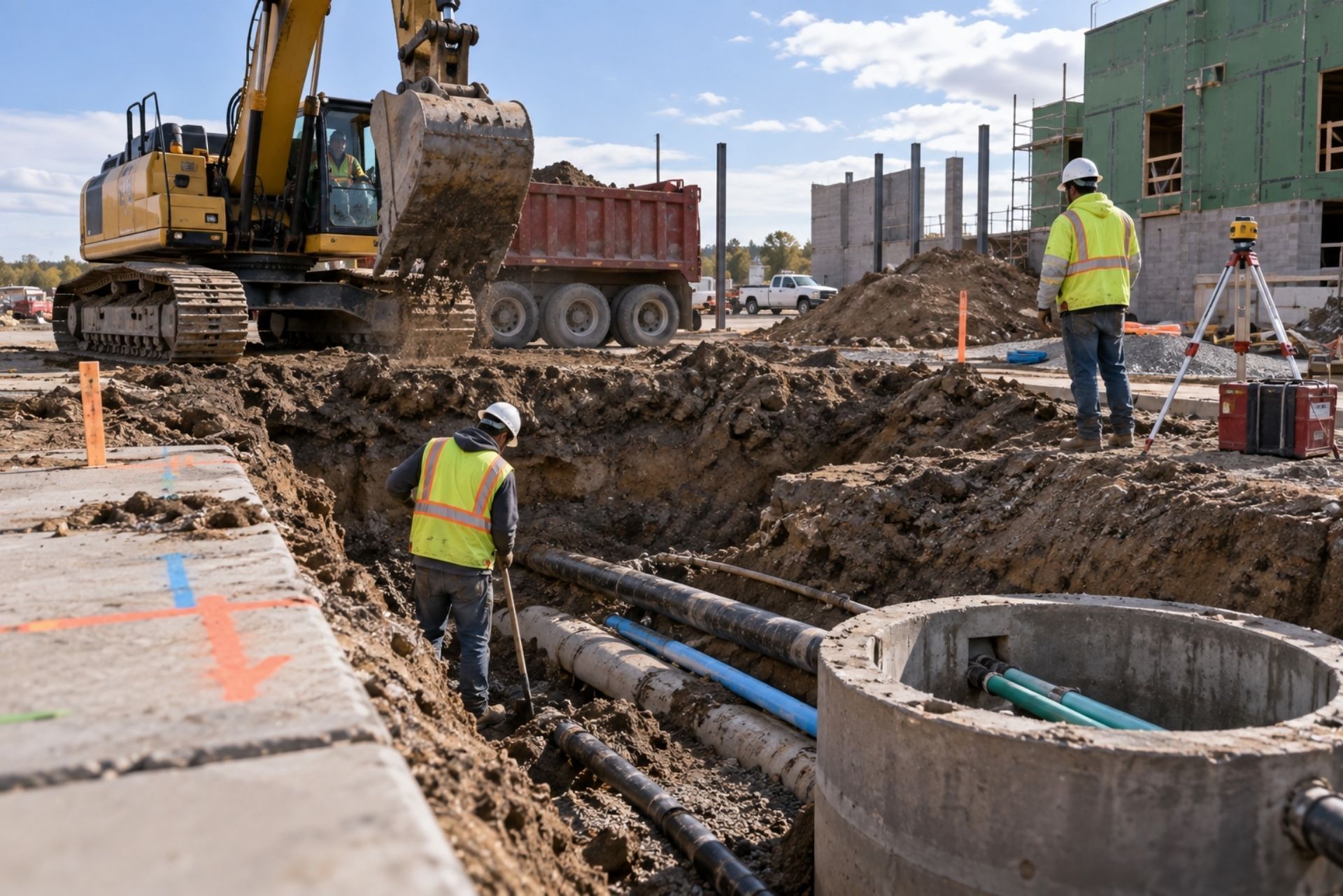
Imagine you install a storm drain system in April. By September, the backfill settles unevenly, an adjacent retaining wall shifts, and the property owner's parking structure develops cracks. That's a completed operations claim. Without proper XCU protections extending into your completed operations coverage, your insurer can deny the claim on the basis that the damage resulted from underground hazards or collapse. The true cost of damage incidents extends well beyond the initial repair, often involving business interruption, environmental remediation, and third-party injury claims that surface months later. Make sure your completed operations coverage doesn't carry XCU exclusions: this is a common oversight that creates massive exposure.
Comparing Standard GL vs. XCU-Enhanced Coverage
The difference between a standard CGL policy and one with proper XCU protections is stark. Most contractors assume their GL covers everything. It doesn't.
Table: Coverage Comparison for Excavation Hazards
| Hazard Type | Standard CGL (with CG 21 42) | XCU-Enhanced CGL |
|---|---|---|
| Gas line explosion from excavation | Excluded | Covered |
| Collapse of adjacent structure | Excluded | Covered |
| Underground utility line strike | Excluded | Covered |
| Subsidence/earth movement | Typically excluded | May be covered (varies) |
| Completed operations: underground | Excluded | Covered |
| Third-party bodily injury from blast | May be excluded | Covered |
| Environmental cleanup from line rupture | Excluded | Often covered with endorsement |
The right-hand column is where you need to be. If your policy looks like the middle column, you're carrying risk you think is insured but isn't.
Real-World Claim Scenarios for Utility Contractors
Abstract policy language means little until you see how it plays out on an actual jobsite. These scenarios reflect the types of claims we see regularly among excavation and utility contractors.
Utility Line Strikes and Underground Property Damage
A directional boring crew working a fiber optic installation in a suburban neighborhood hits an unmarked 4-inch gas main. The rupture triggers an evacuation of 30 homes, fire department response, and a $420,000 repair and remediation bill. The underground utility damage costs associated with incidents like this have been climbing steadily, and without XCU coverage, the contractor's CGL policy would deny the claim outright. With proper coverage, the insurer handles defense costs, the property damage claim, and the resulting business interruption demands from affected homeowners.
Structural Failure of Adjacent Buildings Post-Excavation
A foundation contractor excavates a 14-foot trench for a commercial building's footings. Three weeks later, the neighboring building's basement wall bows inward and partially collapses. The building owner files a $1.2 million claim. This is a textbook collapse hazard: if CG 21 42 is on the contractor's policy, coverage is denied. The contractor faces litigation costs alone, which can easily exceed $50,000 before a verdict is reached. Fusco Orsini & Associates has handled cases like this where the difference between having and lacking XCU protection determined whether the contractor survived financially.
Common Questions About XCU and Underground Insurance
FAQ: What happens if I hit a gas line not marked by 811?
You're still liable for the damage in most states, even if the locate was inaccurate or incomplete. Your XCU coverage would respond to the claim, but you'll also want to document everything: photos, locate tickets, and crew logs. The CGA's annual damage reporting data shows that inaccurate locates remain a leading cause of strikes.
FAQ: Does standard General Liability cover earth movement?
Usually not. Most CGL policies exclude earth movement, subsidence, and related settling unless you've specifically added XCU protections. Even then, subsidence may require a separate endorsement depending on your carrier.
FAQ: How do I know if the CG 21 42 exclusion is on my policy?
Check the endorsement schedule attached to your CGL policy. Look for form number CG 21 42 or any language referencing "explosion, collapse, and underground property damage hazard exclusion." If you're unsure, ask your agent to confirm in writing. Don't assume it's not there.
FAQ: Is XCU coverage required by law for contractors?
No federal law mandates it, but many general contractors and municipalities require XCU coverage as a condition of contract. In California, public works projects frequently specify minimum XCU limits. If you can't show proof of coverage, you won't win the bid.
Before You Buy a Policy
XCU coverage isn't a luxury add-on for excavation and underground utility contractors. It's the foundation of a policy that actually protects your business. The CG 21 42 exclusion can silently strip away the coverage you need most, and completed operations gaps can leave you exposed to claims that surface months after you've left a jobsite.
Here's what to do right now: pull your current CGL policy. Check the endorsement schedule for CG 21 42 or any XCU-related exclusions. Verify that your completed operations coverage extends to underground and collapse hazards. If you're not sure what you're looking at, that's exactly why working with a specialist matters.
Fusco Orsini & Associates works with excavation and utility contractors across California and beyond to structure policies that match the actual risks you face in the field. Don't wait for a denied claim to find out your coverage has holes. Get a policy review before your next project starts.
About The Author:
Michael Fusco
As CEO and Principal of Fusco Orsini & Associates, I’m dedicated to helping businesses and individuals achieve peace of mind through smarter insurance solutions. With extensive experience in commercial insurance and risk management, I focus on building long-term relationships and providing clarity, trust, and value in every policy we deliver.
// Coverage for Your Company
Protect Your Business, Employees, and Assets
We help business owners protect their companies from risks that can disrupt operations or threaten growth. Our team explains your options clearly and guides you to the right coverage for your business.
// Who We Help
Focused Insurance for Your Industry
We understand the unique risks and needs of different industries. Our team provides clear guidance and customized coverage to help you operate with confidence.


// Coverage for Individuals and Families
Protect What Matters Most at Home and Beyond
Renters Insurance
Affordable protection for your personal property in a rented space.
Life Insurance
Ensure your loved ones are financially secure when they need it most.
Umbrella Insurance
Extra liability coverage to protect you beyond standard policies.

// Frequently Asked Questions
Clear Answers to Common Questions

5.0 Reviews on Google
What You Need to Know Before Getting Started
People often ask us about the most common questions around business consulting, insurance, and employee benefits.
What types of insurance does my business need?
We evaluate your operations, identify risks, and explain the policies that make sense for your business. Our goal is to help you understand what you’re buying and ensure nothing important is overlooked.
The right coverage depends on your industry, size, and exposures. We’ll walk you through each option and help you make a confident decision.
Do you provide employee benefits?
Yes. Our dedicated benefits team offers group health, dental, vision, life, and disability plans. We also help employees with claims and explain how to use their benefits effectively.
We design plans that meet your company’s goals while keeping costs manageable and ensuring employees feel supported.
Do you only serve clients in California?
No. While we are based in San Diego, California, we work with clients in 31 states across the country.
We have the licenses and experience to support businesses of all sizes wherever they operate.
Can you review my existing policies?
Absolutely. We offer policy reviews at no cost to you. We’ll look for gaps in coverage, overlapping policies, and opportunities to save money.
Our team makes transitioning from your current provider simple and seamless.
How quickly can I get a quote?
In most cases, we respond the same business day with clear options and next steps.
We know that time matters, and we work efficiently to provide you with answers and coverage without unnecessary delays.
// What Our Clients Say
Reviews from Business Owners Like You
Over 500 Five-Star Ratings Across Platforms
// Business Tips & Resources
Helpful Articles for Business Owners
Our blog offers clear advice to help you protect your business, support your employees, and plan for the future with confidence.


Contact Us
Phone
Location