



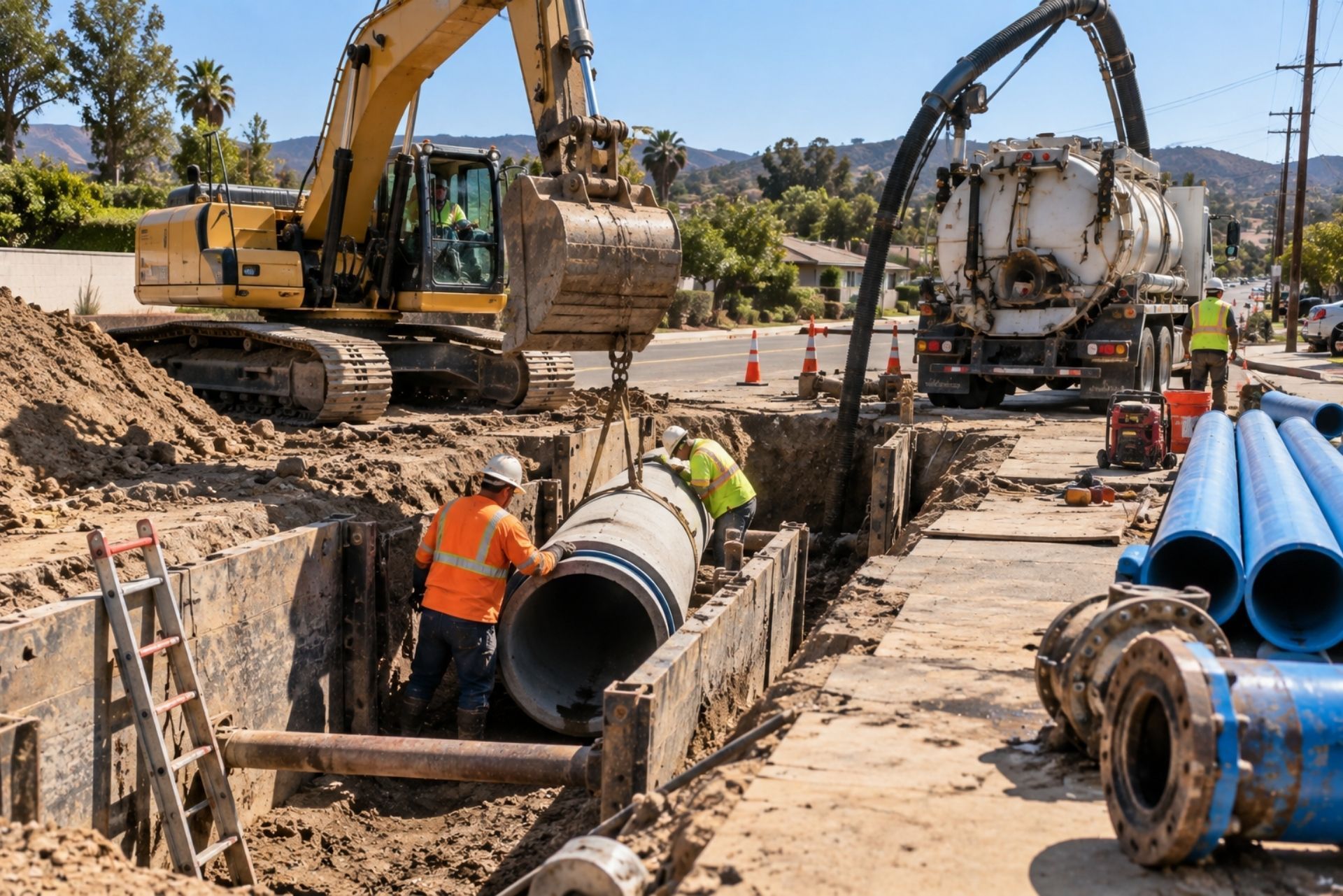
A single strike of an excavator bucket into an unmarked gas line can shut down a city block, trigger a six-figure cleanup, and put your contractor's license at risk. For California sewer and water main contractors, the margin between a profitable project and a catastrophic loss is often defined by the insurance program behind it. Your C-42 or C-34 license qualifies you to dig, but the real question is whether your coverage accounts for the specific exposures that come with trenching, shoring, underground damage, pollution events, public works bonding, and the heavy equipment you rely on daily.
Getting this right isn't optional. California regulators, project owners, and general contractors all demand proof that you're properly insured and bonded before you touch a shovel. The stakes are high: a completed operations claim from a failed sewer lateral can surface years after you've moved on, and a pollution event involving contaminated soil or groundwater can exceed standard policy limits in days. This guide breaks down the coverage categories, regulatory requirements, and risk management strategies that matter most for underground utility contractors working across the state in 2026.
Essential Insurance Requirements for California C-42 and C-34 Licenses
California's Contractors State License Board (CSLB) sets minimum financial responsibility standards for every active license. If you hold a C-42 (Sanitation System) or C-34 (Pipeline) license, you're already familiar with the contractor's bond requirement. But there's a critical distinction between CSLB bonding obligations and the liability insurance that actually protects your business from claims.
CSLB Bonding vs. General Liability Insurance
Your CSLB contractor's bond (currently $25,000) is a consumer protection instrument, not an insurance policy. It exists so the public can file a claim if you violate licensing law or fail to complete contracted work. It doesn't cover third-party injuries, property damage, or environmental contamination. [https://www.contractorbond.org/california-contractor-license-bond/]
General liability insurance is what responds when your crew damages an adjacent property, a pedestrian trips over an unmarked trench, or a water main break floods a commercial building. Public works projects in California typically require general liability limits, with many municipal agencies demanding specific coverage amounts. The bond gets you licensed; the insurance keeps you in business.
Bond demand among California contractors has surged 200 to 300 percent as of April 2026, reflecting tighter cash positions across the industry. If you're bidding public works, expect bonding capacity and cost to be a bigger factor than it was even two years ago.
Workers' Compensation Laws for Excavation and Plumbing
California requires workers' compensation coverage for every employee, with no exceptions for small crews. Excavation and pipeline work carry some of the highest experience modification rates in construction due to the frequency of cave-in injuries, struck-by incidents, and repetitive strain claims.
Your workers' comp classification codes (5183 for
plumbing, 6315 for excavation) directly affect your premium. Misclassification is one of the fastest ways to trigger an audit surcharge or, worse, lose coverage mid-project. We've seen contractors at Fusco Orsini & Associates who saved thousands annually simply by ensuring their payroll was split correctly between office staff and field crews.
Core Coverage Categories for Sewer and Water Projects
Underground utility work generates a distinct set of exposures that standard commercial policies often miss. Your insurance program needs to address third-party damage, environmental contamination, and equipment loss as separate but connected risks.
General Liability for Third-Party Damage and Injury
Your commercial general liability (CGL) policy is the foundation. It covers bodily injury and property damage claims from third parties, including damage to existing utilities, structures, and roadways during your work.
One common gap: most CGL policies include an underground resources and equipment exclusion (often called the "XCU" exclusion). If your policy still carries this exclusion, damage caused by your excavation work to underground utilities or structures won't be covered. You need XCU coverage explicitly included, and any broker experienced with utility contractors should flag this during your policy review.
California's updated "One Call Law" (Government Code 4216) now gives the Underground Safety Board expanded authority to investigate accidents and enforce penalties up to $100,000 for violations involving high-priority lines. A single failure to call 811 or properly mark a dig zone can result in both regulatory fines and uninsured liability.
Pollution Liability and Environmental Protection
Standard CGL policies exclude pollution events. That's a problem when your crew hits contaminated soil during a sewer line replacement or when a water main repair releases sediment containing regulated substances.
The EPA's 2026 designation of PFOA and PFOS as hazardous substances under CERCLA has made this gap even more dangerous. Water main contractors now face increased pollution liability that often requires standalone Contractors Pollution Liability (CPL) coverage because standard policies won't respond to PFAS-related claims. If you're working on older municipal water systems, the odds of encountering these substances are real.
A CPL policy covers cleanup costs, third-party bodily injury from pollution events, and defense costs when regulators come knocking. Policy limits vary, but projects near sensitive waterways or residential areas may require higher coverage amounts.
Inland Marine Insurance for Heavy Equipment and Tools
Your excavators, backhoes, shoring equipment, and dewatering pumps represent hundreds of thousands of dollars in capital. A standard commercial property policy won't cover mobile equipment at job sites.
Inland marine insurance fills that gap, covering theft, vandalism, transit damage, and equipment breakdown at any location. The 2026 Caltrans Labor Surcharge and Equipment Rental Rates show continued increases in the Producers' Price Index for equipment, meaning replacement costs are climbing. If your policy limits haven't been updated recently, you could be significantly underinsured.
Here's the good news: the inland marine market is currently buyer-friendly, with increased carrier appetite allowing contractors to negotiate higher coverage limits despite rising equipment values. If there's a year to push for better terms on your equipment floater, 2026 is it.
Comparison of Standard vs. Specialized Coverage
Not all policies are built for underground work. The difference between a generic contractor's policy and one designed for sewer and water main operations can mean the difference between a covered claim and a denial letter.
Coverage Comparison Table
| Coverage Feature | Standard CGL Policy | Specialized Utility Contractor Policy |
|---|---|---|
| XCU Coverage | Typically excluded | Included |
| Pollution/PFAS Events | Excluded | Available via CPL endorsement or standalone |
| Completed Operations | Limited (often 1-year tail) | Extended tail (5-10 years) |
| Shoring/Trench Collapse | May be excluded | Covered with proper safety documentation |
| Underground Utility Damage | Sub-limited or excluded | Full limits apply |
| Equipment at Job Site | Not covered | Covered via inland marine floater |
| Public Works Bonding Support | Not included | Coordinated with surety program |
This table illustrates why working with a broker who understands California contractor insurance for trenching, shoring, pollution, and equipment exposures is so important. A generalist agent may not even know to ask about XCU coverage or completed operations tails.
Managing Risks Unique to Underground Utility Work
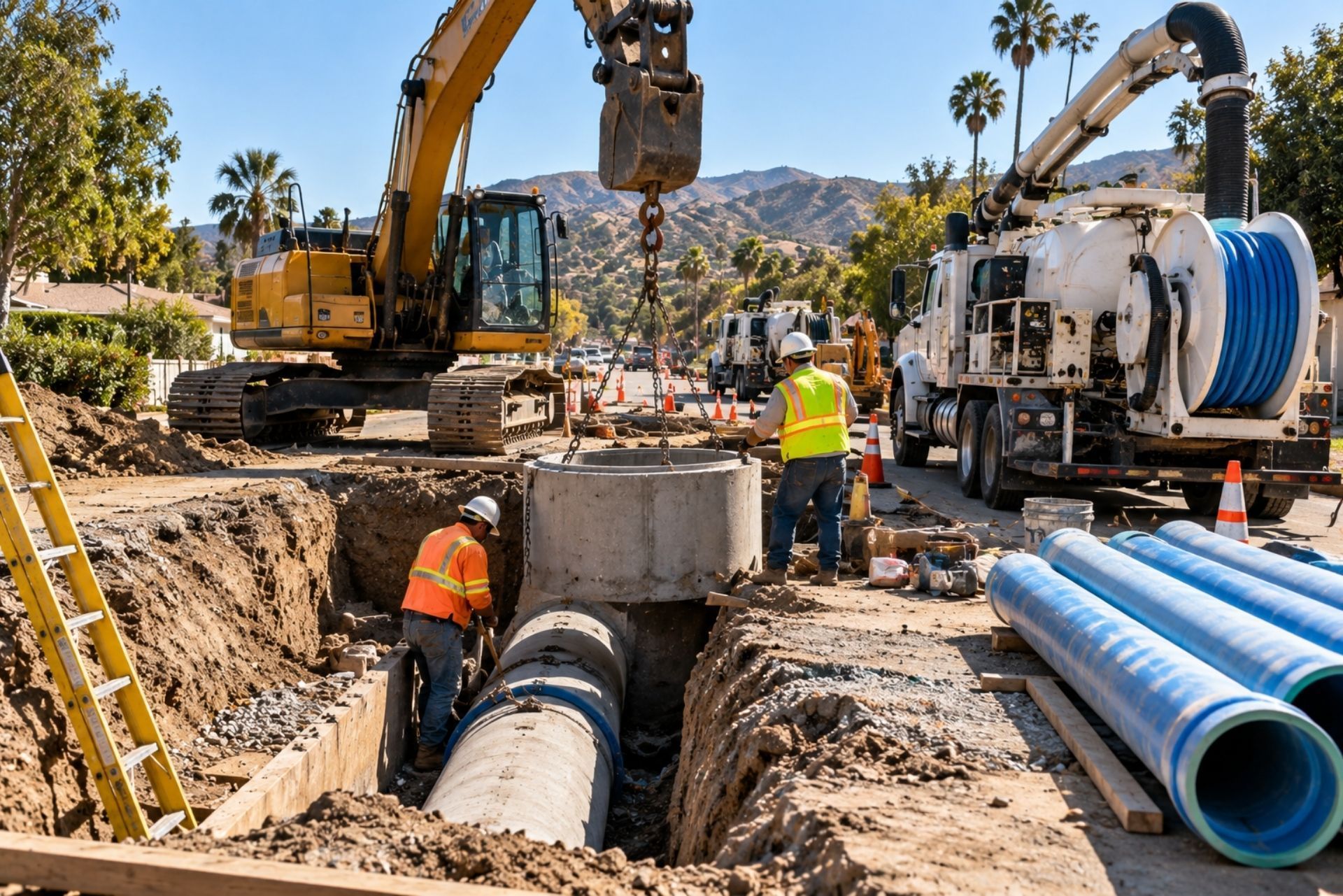
Underground construction carries risks you can't see until they become claims. Your insurance program should anticipate these exposures, not just react to them.
Protection Against Trenching and Shoring Accidents
Cal/OSHA takes trench safety seriously, and so do underwriters. If your crew is working in excavations deeper than five feet without proper shoring, sloping, or a trench box, you're violating state law and potentially voiding your insurance coverage.
Underwriters want to see a written safety program, documented daily inspections, and proof that your competent person designation is current. Contractors who can demonstrate strong safety records and formal training programs often qualify for lower premiums. At Fusco Orsini & Associates, we regularly help clients document their safety protocols in a way that satisfies both Cal/OSHA requirements and underwriter expectations.
Completed Operations and Construction Defect Claims
A sewer lateral you installed three years ago fails and floods a homeowner's basement. A water main connection develops a slow leak that undermines a building foundation over 18 months. These are completed operations claims, and they're among the most expensive exposures for underground contractors.
California's statute of limitations for construction defect claims can extend up to ten years under certain conditions. Your CGL policy's completed operations coverage needs to match that timeline. Many standard policies limit the tail to just one or two years, leaving you exposed during the period when defects are most likely to surface.
Frequently Asked Questions About Utility Contractor Insurance
Do I need separate pollution insurance if I only do sewer work? Yes. Your CGL policy excludes pollution events, and sewer work regularly involves contact with contaminated soil, groundwater, and now PFAS-regulated substances. A standalone CPL policy is the only reliable way to cover these exposures.
How much general liability coverage do public works projects require? Most California municipalities require specific liability limits, but larger projects and agencies like Caltrans often require higher amounts. Check the bid specifications carefully before quoting.
What's the difference between my CSLB bond and a performance bond? Your CSLB bond ($25,000) satisfies licensing requirements. A performance bond guarantees you'll complete a specific project per the contract terms. Public works projects almost always require both a performance bond and a payment bond, each typically equal to 100% of the contract value. [https://www.contractorbond.org/california-contractor-license-bond/] [https://www.constructionprosinc.com/blog/public-works-bonding-requirements-california]
Will my insurance cover damage to unmarked utilities? It depends. If you followed proper 811 notification procedures and the utility was unmarked or mismarked, your CGL policy (with XCU coverage) should respond. If you failed to call or ignored markings, you may face both a coverage denial and regulatory penalties.
Is inland marine insurance worth it for smaller operations?
If you own even one excavator or backhoe, yes. A single piece of stolen or damaged equipment can cost more than years of inland marine premiums. The current soft market makes this coverage particularly affordable.
What This Means for Your Business
California sewer and water main contractors face a unique combination of regulatory pressure, environmental liability, and physical risk that demands more than a basic insurance package. Your coverage program needs to account for trenching accidents, underground damage to third-party utilities, pollution events involving emerging contaminants like PFAS, public works bonding requirements, and the rising replacement cost of your equipment.
The 2026 market offers some real opportunities, particularly in inland marine and equipment coverage, but it also brings new challenges with tighter bonding capacity and expanded environmental regulations. Don't wait for a claim denial to find out your policy has gaps.
If you're unsure whether your current program covers these exposures, reach out to the team at Fusco Orsini & Associates for a coverage review. We work with California utility contractors daily and can identify gaps before they become six-figure problems. A 30-minute audit of your policies now is worth far more than a coverage dispute after a loss.
About The Author:
Michael Fusco
As CEO and Principal of Fusco Orsini & Associates, I’m dedicated to helping businesses and individuals achieve peace of mind through smarter insurance solutions. With extensive experience in commercial insurance and risk management, I focus on building long-term relationships and providing clarity, trust, and value in every policy we deliver.
// Coverage for Your Company
Protect Your Business, Employees, and Assets
We help business owners protect their companies from risks that can disrupt operations or threaten growth. Our team explains your options clearly and guides you to the right coverage for your business.
// Who We Help
Focused Insurance for Your Industry
We understand the unique risks and needs of different industries. Our team provides clear guidance and customized coverage to help you operate with confidence.


// Coverage for Individuals and Families
Protect What Matters Most at Home and Beyond
Renters Insurance
Affordable protection for your personal property in a rented space.
Life Insurance
Ensure your loved ones are financially secure when they need it most.
Umbrella Insurance
Extra liability coverage to protect you beyond standard policies.

// Frequently Asked Questions
Clear Answers to Common Questions

5.0 Reviews on Google
What You Need to Know Before Getting Started
People often ask us about the most common questions around business consulting, insurance, and employee benefits.
What types of insurance does my business need?
We evaluate your operations, identify risks, and explain the policies that make sense for your business. Our goal is to help you understand what you’re buying and ensure nothing important is overlooked.
The right coverage depends on your industry, size, and exposures. We’ll walk you through each option and help you make a confident decision.
Do you provide employee benefits?
Yes. Our dedicated benefits team offers group health, dental, vision, life, and disability plans. We also help employees with claims and explain how to use their benefits effectively.
We design plans that meet your company’s goals while keeping costs manageable and ensuring employees feel supported.
Do you only serve clients in California?
No. While we are based in San Diego, California, we work with clients in 31 states across the country.
We have the licenses and experience to support businesses of all sizes wherever they operate.
Can you review my existing policies?
Absolutely. We offer policy reviews at no cost to you. We’ll look for gaps in coverage, overlapping policies, and opportunities to save money.
Our team makes transitioning from your current provider simple and seamless.
How quickly can I get a quote?
In most cases, we respond the same business day with clear options and next steps.
We know that time matters, and we work efficiently to provide you with answers and coverage without unnecessary delays.
// What Our Clients Say
Reviews from Business Owners Like You
Over 500 Five-Star Ratings Across Platforms
// Business Tips & Resources
Helpful Articles for Business Owners
Our blog offers clear advice to help you protect your business, support your employees, and plan for the future with confidence.
Contact Us
Phone
Location