



DOL 2026 Independent Contractor Rule: What SMBs Should Know
See How We're Different
or call us: (858) 384‑1506
What small and mid-sized businesses should do now to prepare for possible classification changes
On Feb. 26, 2026, the U.S. Department of Labor (DOL) announced a proposed rule that could change how businesses classify workers as employees or independent contractors under the Fair Labor Standards Act (FLSA).
The proposal would rescind the DOL’s 2024 independent contractor rule and replace it with an employee classification analysis similar to the framework the department adopted in 2021. The proposed rule was published in the Federal Register on Feb. 27, 2026.
For small and mid-sized businesses that rely on independent contractors, this potential change raises important questions about how worker relationships are evaluated. To better understand the impact, it's useful to look at the possible shift back to an “economic realities” analysis, which considers factors such as:
- If a worker is in business for themself, or is an employee economically dependent on an employer for work
Further considered factors are:
- a worker’s level of independence and control over their work
- a worker’s opportunity for profit or loss based on initiative and/or investment
- the amount of skill required for the work
- the degree of permanence of the working relationship; and
- if the work is part of an integrated unit of production
Given these factors, SMBs that use freelancers, gig workers, or other independent contractors should closely monitor the rulemaking process and review their current worker classification practices in anticipation of potential changes. The DOL is currently accepting public comments through April 28, 2026, before deciding whether to issue a final rule.
So, what practical actions should SMBs take right now in light of the proposed independent contractor rule?
Because the rule is still in the proposal stage, no immediate changes are required. However, auditing contractor relationships and tightening documentation now can reduce compliance risk if the rule is finalized.
Here are 5 practical steps SMBs can take now:
1. Review Your Current Contractor Relationships
Conduct a quick audit of workers currently classified as independent contractors, focusing on:
- Degree of control you exercise over their work (schedule, methods, supervision)
- If the worker is economically dependent on your business
- If the worker serves multiple clients or primarily works for you
- Whether the work is core to your business operations
If contractors look more like employees under these factors, they could present risk if the rule is finalized.
2. Document the Business Relationship
Make sure contractor arrangements are clearly documented:
- Written independent contractor agreements
- Scope of work and project-based deliverables
- Payment terms based on projects or outcomes
- Statements confirming that the contractor controls how work is performed
Documentation alone won’t determine classification, but it helps demonstrate intent.
3. Reduce Employee-Like Controls Where Possible
SMBs should evaluate operational practices such as:
- Setting strict work schedules
- Requiring contractors to use company systems or equipment
- Managing contractors like staff through performance reviews and related processes
The more control exercised, the greater the risk of employee classification.
4. Consider Structural Alternatives
Some SMBs may start evaluating alternatives such as:
- Using project-based contractors
- Working through staffing agencies
- Converting certain long-term contractors to part-time employees, and clearly ending the contractor relationship and starting a new employment relationship
5. Evaluate Financial Exposure
If contractors are reclassified as employees, SMBs could face liability for:
- Back wages and overtime
- Payroll taxes
- Benefits and leave
- Potential penalties
Conduct a classification risk assessment now to avoid surprises. Contact our
HR Advisory team for support.
What is a real-life example of an independent contractor vs. employee?
The job itself (electrician, carpenter, graphic designer, VA, etc.) does not determine classification. What matters is how the relationship operates in practice.
Here’s a general example:
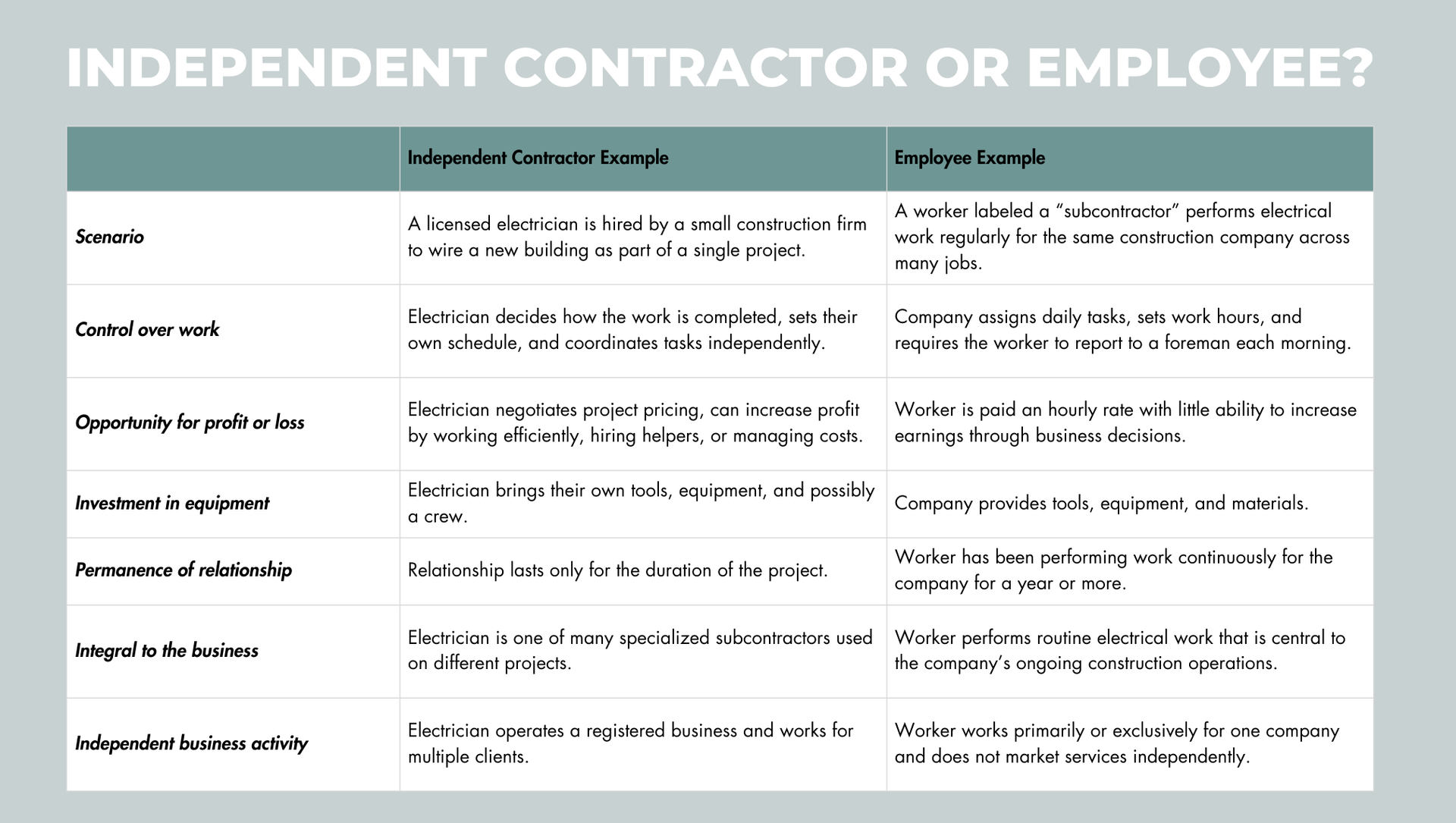
If you still have questions after reviewing this example, you're welcome to book an intro call with our HR advisory team HERE.
Sources:
Zywave: Legal Update - DOL Announces Proposed Independent Contractor Rule
AI Disclosure:
Portions of this content were generated with the assistance of ChatGPT (OpenAI) on March 12, 2026, and reviewed by our insurance team for accuracy.
Disclaimer:
This information is intended for reference only and should not be considered as financial or legal advice. Consult with a qualified professional for personalized guidance.

Recent Post